Treks
Treks near Rishikesh: waterfall walks, Neelkanth and bigger starts
Short waterfall walks, Kunjapuri at sunrise, the Neelkanth walk, and Chopta or Kedarkantha as bigger starts.
Last updated 9 Oct 2026 · 10 min read
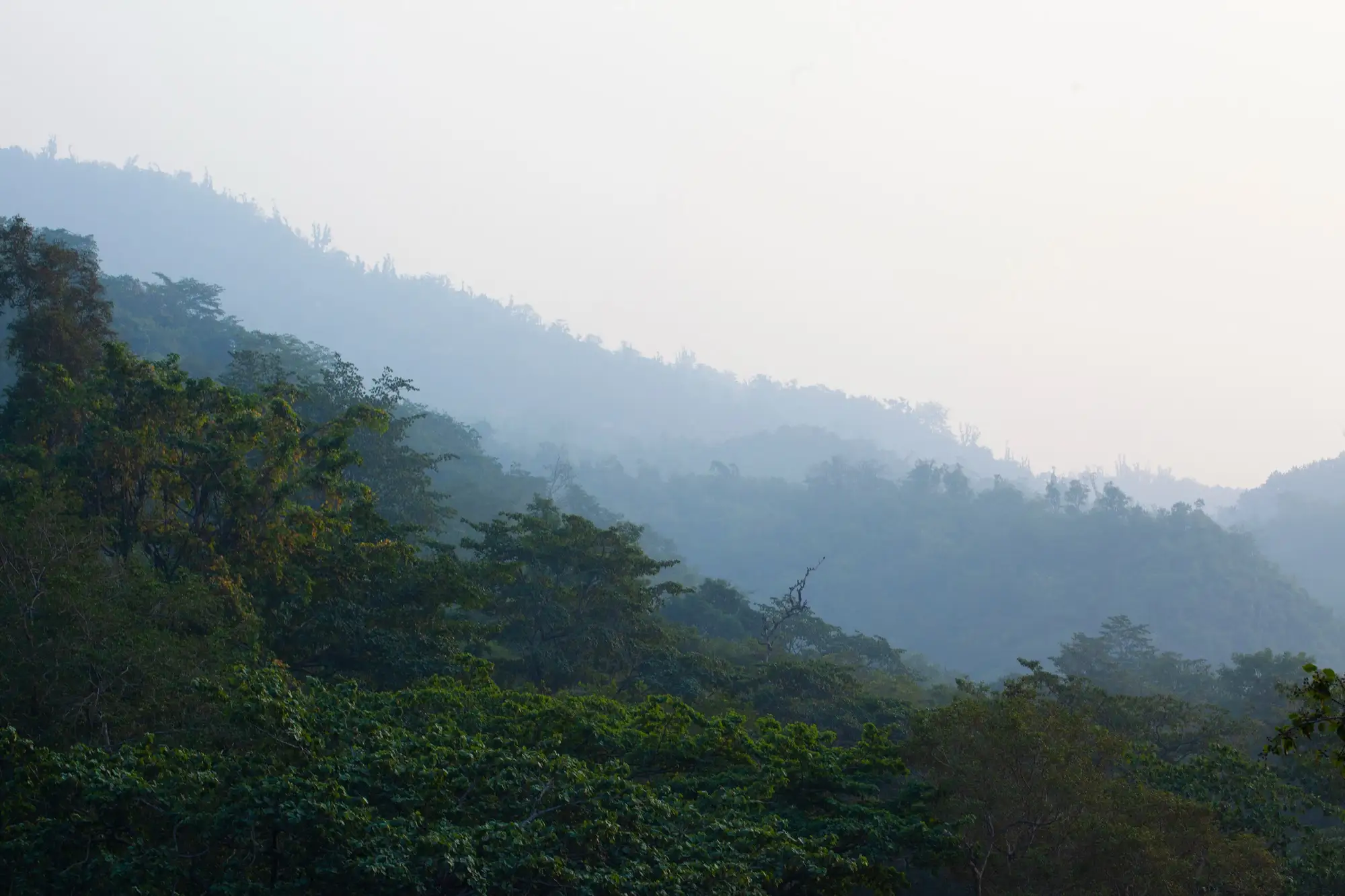
Rishikesh is a town of short walks and a starting point for bigger treks, not a trekking base. The walks are Neer Garh waterfall (1.5 to 3 hours round trip, ₹30 to ₹50 entry), Kunjapuri for sunrise and the 12 to 14 km Neelkanth walk through Rajaji Tiger Reserve. Chopta is 158 km away, Nag Tibba 124 km and Kedarkantha 222 km, and operators run them as packages from about ₹3,000 to ₹10,000.
On this page
- TL;DR summary
- Walks and treks near Rishikesh compared
- Riverside and waterfall walks near Rishikesh
- Kunjapuri trek
- Neelkanth Mahadev trek from Swarg Ashram through Rajaji
- Multi-day treks from Rishikesh
- Rules and safety on Rishikesh walks
- Which Rishikesh walk fits 2 to 3 hours, a Saturday, a long weekend
- Frequently asked questions
This is one part of our Rishikesh guide.
TL;DR summary
- Easiest waterfall: Neer Garh, 1.5 to 3 h. ₹30 to ₹50 entry, a paved stone path of about 1.2 km each way. Open to 5 pm.
- Neelkanth walk: 12 to 14 km one way. From Swarg Ashram through Rajaji Tiger Reserve. Elephant country, so go in daylight and in a group.
- Kunjapuri sunrise: 25 to 30 km, 45 to 60 min. Leave about 4 am. The walk down to Tapovan is 7 to 13 km, depending on the route.
- Nearest big trek: Nag Tibba, 124 km. Two days, about 3,000 m, ₹3,000 to ₹3,450 and no permit for Indian citizens.
- Chopta and Tungnath: 158 km, ₹9,900. Three days. Best in April, June, September and November.
- Camping rule: Not within 100 m of the Ganga. National Green Tribunal order of 2 March 2017. Camps close in the monsoon.
Walks and treks near Rishikesh compared: time, start, season and caution
| Walk or trek | Time | Start | Season | Good to know |
|---|---|---|---|---|
| Riverside path, Ram Jhula to Laxman Jhula | About 35 min one way | Either bridge site | All year | No loop while the bridges are shut |
| Neer Garh waterfall | 1.5 to 3 hours | Forest gate north of Tapovan | September to March | ₹30 to ₹50; slippery in the monsoon |
| Garud Chatti waterfall | About 1.5 km each way | Neelkanth road | Not in the monsoon | Free; no parking |
| Patna waterfall | 2 to 2.5 hours | Forest gate on the Neelkanth road | September to June | Free or ₹40; no lifeguard |
| Kunjapuri temple and walk down | About 6 hours in all | Pick-up around 4 am | All year except July and August | Walk down is 7 to 13 km |
| Neelkanth Mahadev walk | 3 to 5 hours up | Swarg Ashram side | February to April, September to November | Elephants; avoid Sawan |
| Nag Tibba | 2 days | Pantwari, 124 km | All year | No permit for Indian citizens |
| Chopta, Tungnath and Chandrashila | 3 days | Chopta, 158 km | April, June, September, November | ₹9,900 from one operator |
| Kedarkantha | Operator package | Sankri, 222 km | October to April | Snow December to February |
| Dayara Bugyal | 4 days | Raithal, 205 km | All year except the monsoon | ₹5,250 to ₹11,299 |
Rishikesh is a town of short walks and a starting point for bigger treks, not a trekking base the way Manali is. The walks here take one to three hours and finish before dusk. The treks that come up when you search for treks near Rishikesh begin 124 to 270 km away in the mountains behind it, and operators mostly collect trekkers from Dehradun. This guide runs in order of the time each needs.
Riverside and waterfall walks near Rishikesh: one to three hours
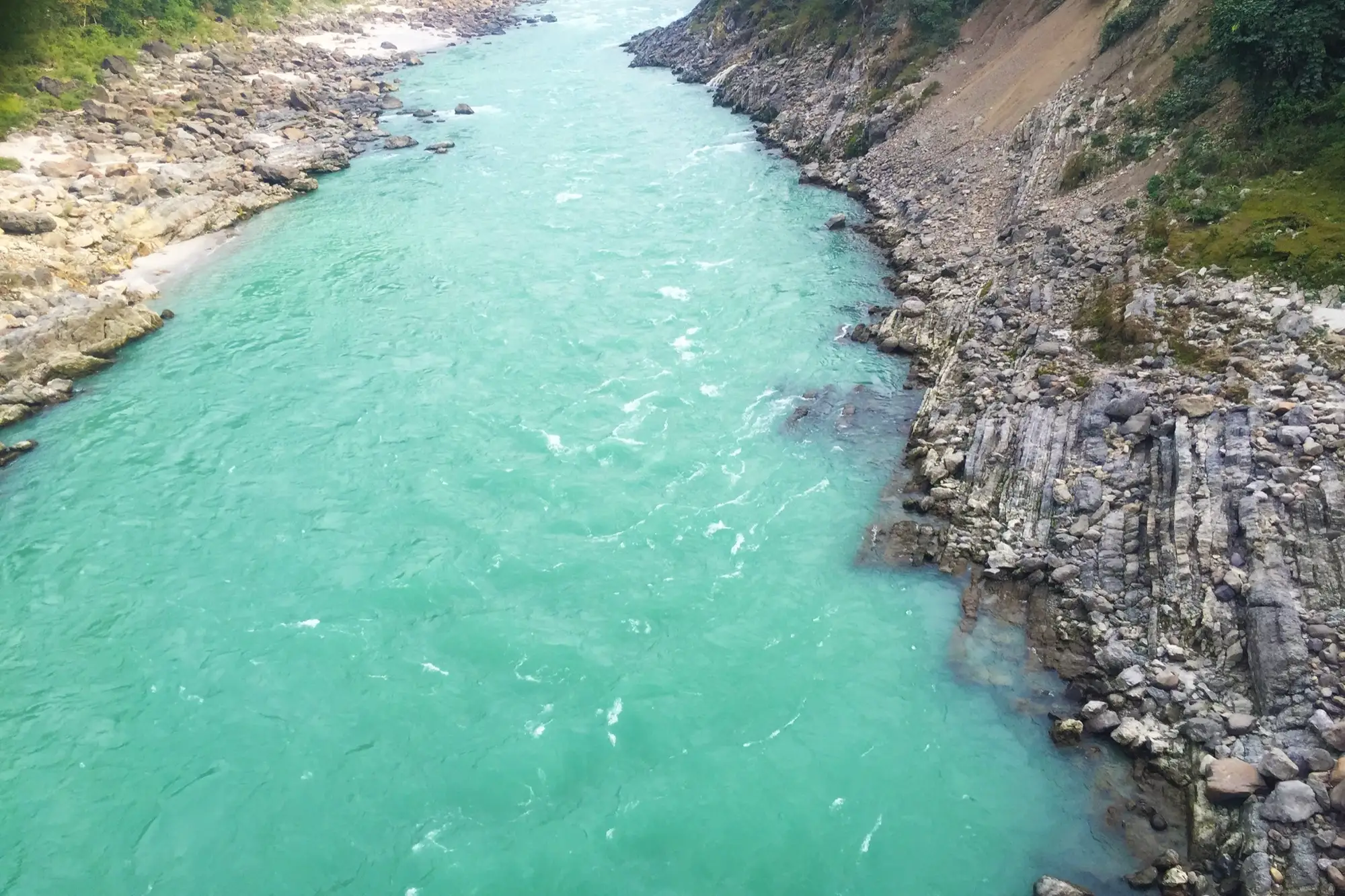
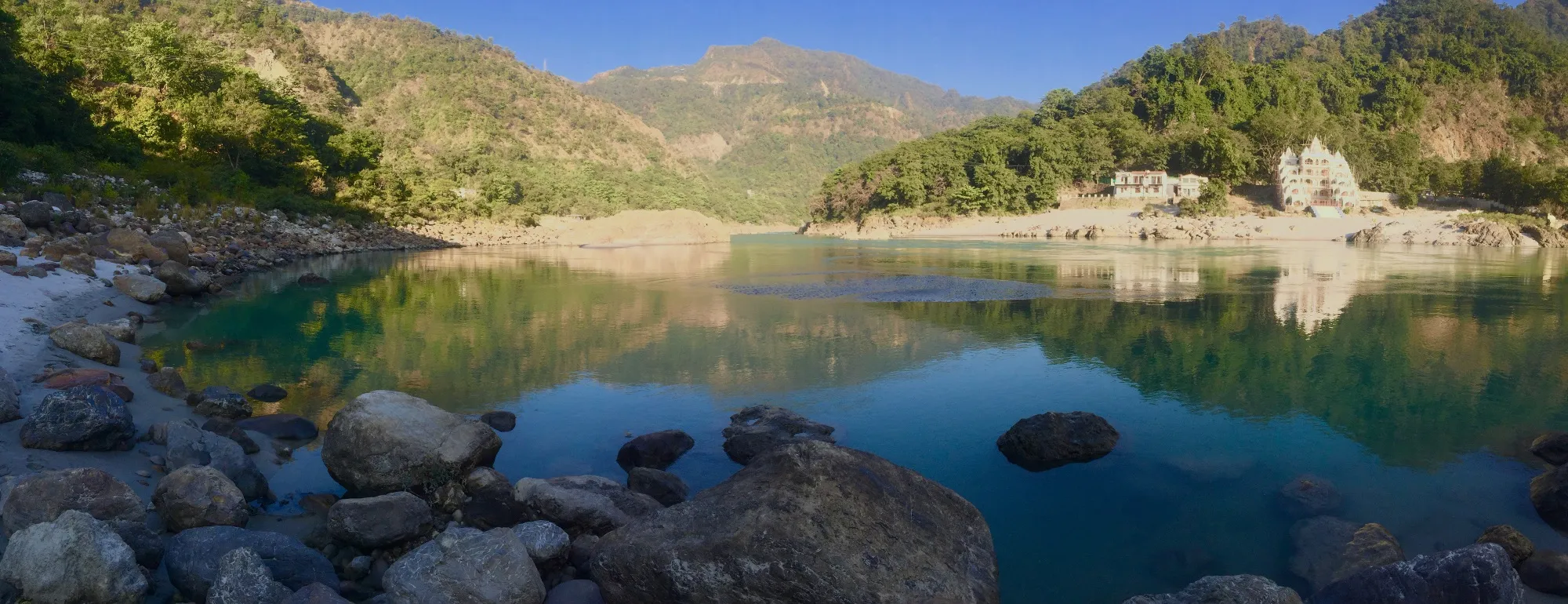 The river at Rishikesh.
Riverside path from Ram Jhula to Laxman Jhula
- Start: either bridge site on the east bank
- Distance: about 2.5 to 3 km
- Time: about 35 minutes one way
- Cost: free
It links the two sides of town, but it is not a loop right now. Laxman Jhula is closed for good and Ram Jhula is shut for repair, with reopening targeted for December 2026, so you walk it one way and cross by Janki Setu or Bajrang Setu. Monkeys sit on the bridges. The things to do guide explains the crossings.
Garud Chatti waterfall: an easy 1.5 km off the Neelkanth road
- Start: the Neelkanth road
- Distance: about 1.5 km from the road
- Cost: free
An easy to moderate walk to a small fall with minimal facilities and no parking. During the Kanwar Yatra the road is a pilgrim route, which is the one time we’d leave it alone.
Neer Garh waterfall trek from Tapovan: the easiest waterfall
- Start: the Forest Department gate on the Badrinath highway, a few kilometres north of Laxman Jhula; an auto from Tapovan is ₹200 to ₹300 return with a wait
- Distance: about 1.2 km from the gate, roughly 4 km round trip to the upper pool
- Time: 1.5 to 3 hours round trip
- Cost: ₹30 to ₹50 for Indian adults, ₹15 for a child, ₹50 to ₹100 for foreigners
- Season: September to March for clear water; open 7 or 8 am to 5 pm, last entry 4 pm
If you only do one waterfall, do this one. The path is paved in stone and well marked, climbs about 150 m and is rated easy to moderate, with a small first fall after 200 m. Small shops at the falls sell water, tea and noodles, and Jio and Airtel work as far as the gate. It gets crowded and has no parking, so we’d go in the morning. In the monsoon the steps are slippery and leeches come out.
Patna waterfall: a longer, steeper walk past a sacred cave
- Start: the forest gate on the Neelkanth road
- Distance: 1.5 km each way, a climb of about 200 m
- Time: 2 to 2.5 hours in all, about 30 minutes of it uphill to the cave
- Cost: free or ₹40 at the gate, so carry ₹50
- Season: September to June
Patna is the second waterfall to add: longer and steeper than Neer Garh, rated moderate to strenuous, with slick rock when wet. The base pool is shallow and rocky, there is no lifeguard, and signal turns patchy from the cave onward.
Kunjapuri trek: a one day trek near Rishikesh at sunrise
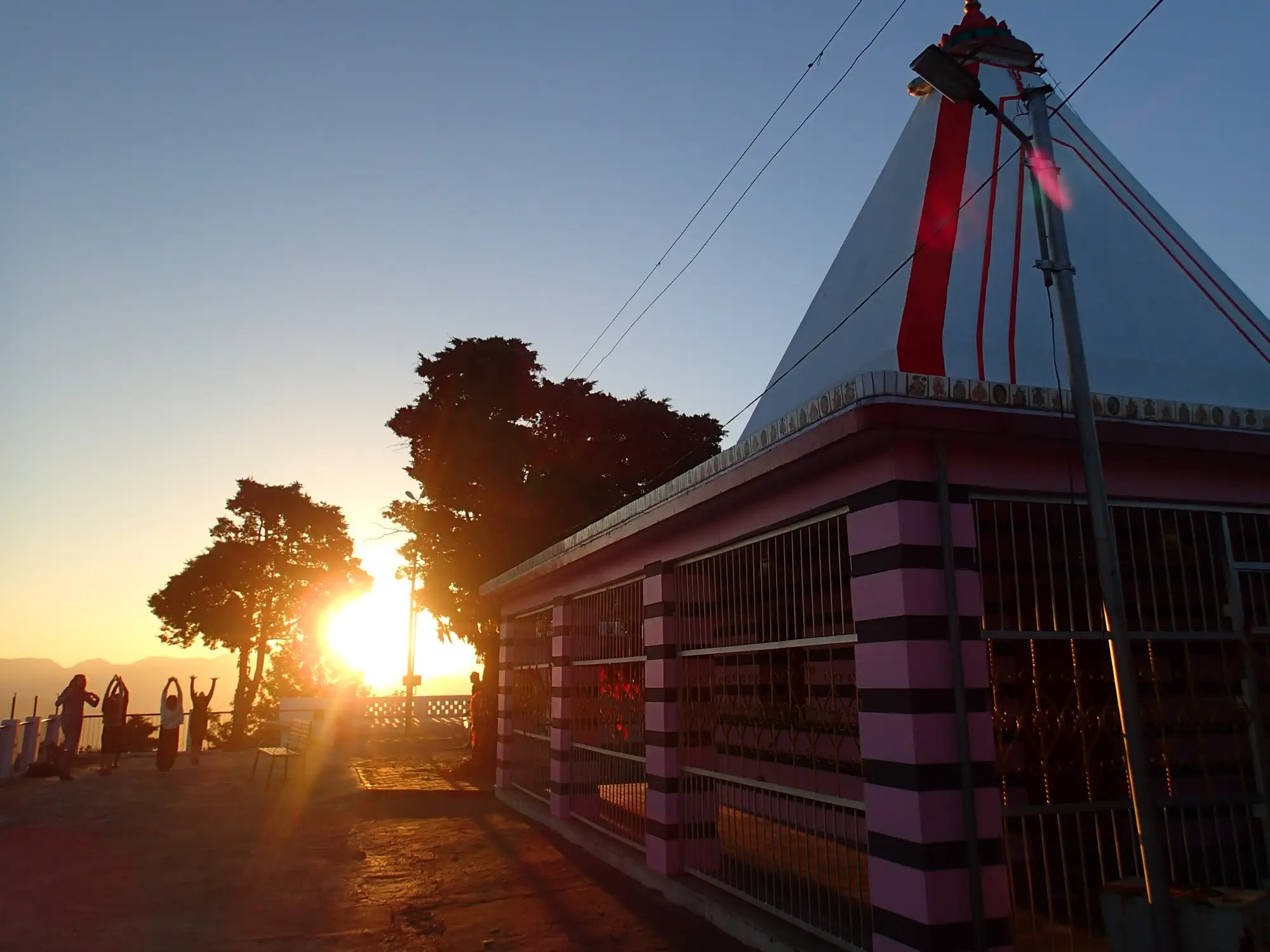 Kunjapuri temple. Photo: Travel & Shit, CC BY-SA 2.0, via Wikimedia Commons.
- Start: a taxi or guided pick-up around 4 am; the temple is 25 to 30 km from Rishikesh, 45 to 60 minutes by road
- Distance: the walk down is 7 to 13 km, depending on the operator’s route
- Time: about 6 hours in all with the walk down; 2 to 3 hours for the drive and temple alone
- Cost: guided groups ₹1,620 to ₹2,400 a head, solo quotes up to ₹4,500, one operator listing ₹3,500 plus GST; by taxi, agree the fare first
- Season: all year, but not July and August; cold and windy in winter
Kunjapuri sits at 1,676 m, and the reason to go is the sunrise over Swargarohini, Bandarpunch, Gangotri and Chaukhamba. You climb 80 to about 300 steps from the road. The walk down to Tapovan goes through the forest, and operators run it on different routes, so confirm the route and the end point when you book. Kunjapuri is in the opposite direction from Neelkanth, so give each its own day.
Neelkanth Mahadev trek from Swarg Ashram through Rajaji
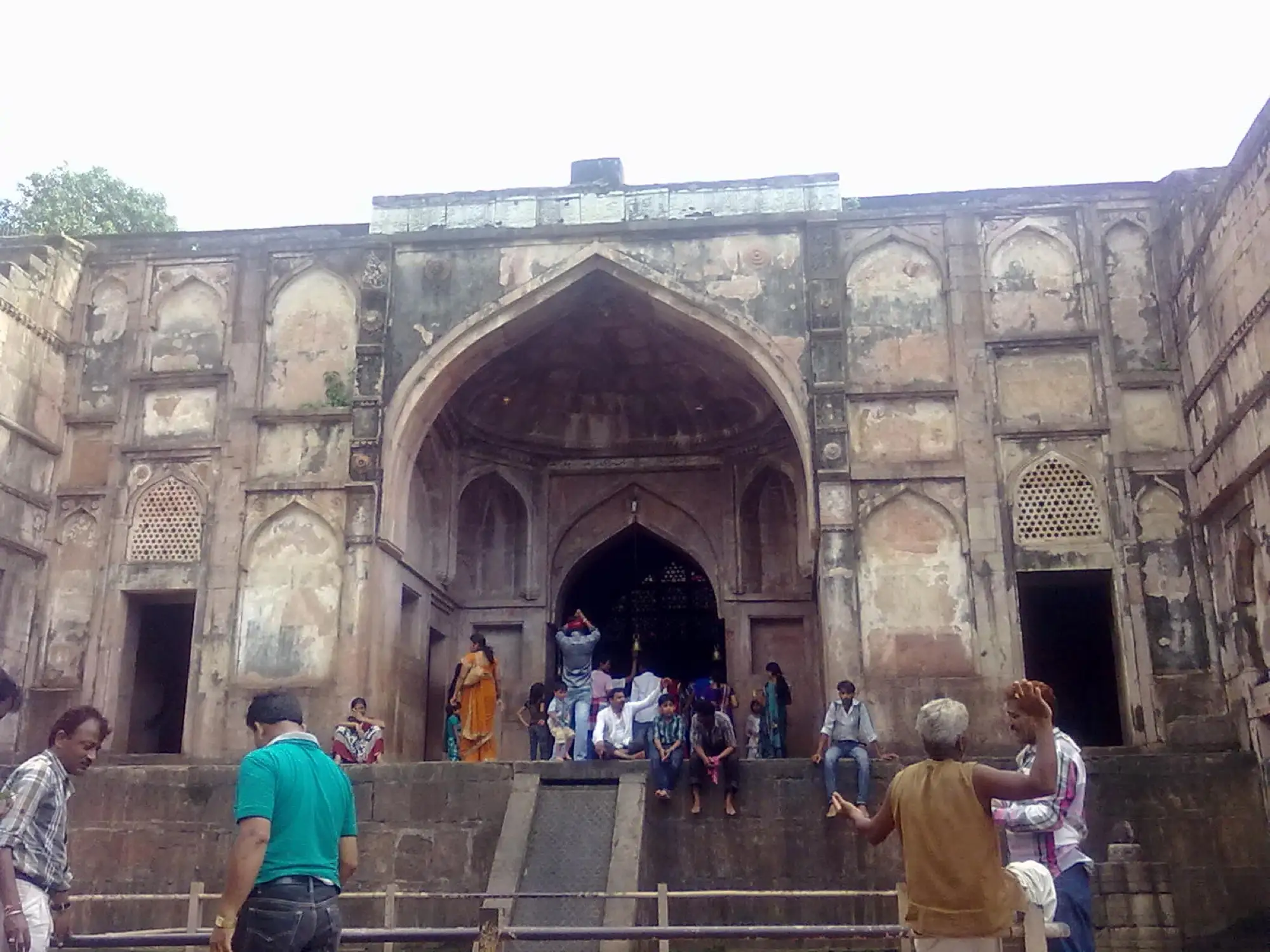 The Neelkanth Mahadev temple, at the end of the walk. Photo: Anurodhraghuwanshi, CC BY-SA 3.0, via Wikimedia Commons.
- Start: the Ram Jhula and Swarg Ashram side. While Ram Jhula is shut, cross by Janki Setu, which is on the Neelkanth route, or by the Muni ki Reti motorboat
- Distance: 12 to 14 km one way; a shorter 9 km route goes via Garud Chatti
- Time: 3 to 5 hours up, about 3 hours down
- Cost: the temple is free; the road back is a shared jeep at ₹80 to ₹250 a seat or a taxi, 1 to 1.5 hours
- Season: February to April, September to November
This is the long walk, and it needs a plan. The temple stands at about 1,330 m, 32 km from Rishikesh by road. The path runs through the elephant country of Rajaji, which covers 820 square kilometres and has tigers, leopards and sloth bears as well. In June 2018 a pilgrim was killed by an elephant on the way back from the temple. Go in daylight and in a group, start early enough to be down before dusk, and ask the forest staff or your host at the start whether a ticket applies that week.
Heat in May and June makes it a poor choice then. Crowds do too: Sawan Mondays, the Kanwar Yatra (30 July to 11 August in 2026) and Maha Shivratri on 6 March 2027 bring queues of many hours and shut the road for long spells. Carry water and cash for the top.
Multi-day treks from Rishikesh: Chopta, Nag Tibba, Kedarkantha
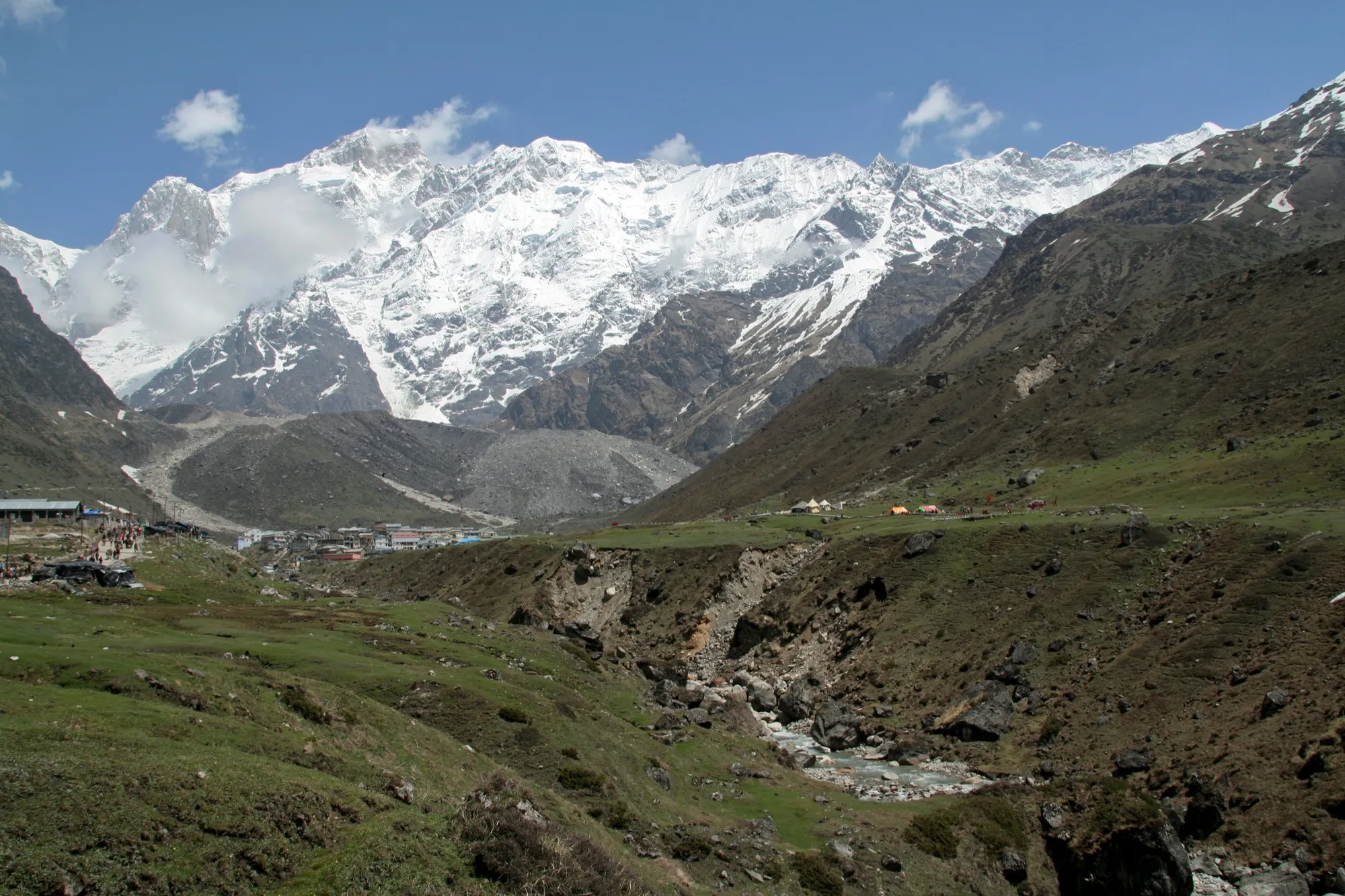 The trekking path to Kedarnath.
These trails begin elsewhere. Operators run them as packages and mostly collect trekkers from Dehradun, though a couple of packages start and end in Rishikesh. Road distances below are from Rishikesh, and the hours are estimates that grow after rain or a landslide. Prices are per person for 2026, usually before 5% GST, and low ones are often discounted from a higher list price.
Nag Tibba: the nearest trek, 124 km to Pantwari
- Start: Pantwari, 124 km by road; allow 4 to 6 hours
- Trek: 2 days, about 3,000 m
- Season: all year
- Cost: ₹3,000 to ₹3,450; budget all-inclusive packages start at ₹1,990
Indian citizens need no permit. This is the one that fits a long weekend.
Chopta from Rishikesh: Tungnath and Chandrashila in 3 days
- Start: Chopta, 158 km by road; allow 6 to 7 hours
- Trek: 7 km, 3 days, about 3,700 m
- Season: best in April, June, September and November
- Cost: ₹9,900 for 3 days, ₹11,700 for a 5 day version
The Tungnath temple closes in winter and the deity moves to Makkumath.
Kedarkantha from Rishikesh: a winter snow trek from Sankri
- Start: Sankri, 222 km by road; allow 9 to 12 hours
- Trek: 20 km to about 3,800 m
- Season: October to April, with snow from December to February
- Cost: ₹5,499 to ₹10,000; the permit is included
Dayara Bugyal, Kuari Pass and Valley of Flowers
Dayara Bugyal starts at Raithal, 205 km away, and takes 4 days to about 3,700 m for ₹5,250 to ₹11,299, in every season except the monsoon. Kuari Pass starts from Joshimath, 251 km and 7 to 8 hours away, and takes 6 days over 28 to 30 km, in October to March, for ₹8,950 to ₹17,999. The Valley of Flowers starts at Govindghat, 270 km away, as a 5 night package from about ₹7,950 to ₹25,500 in July to September. Hemkund Sahib needs the free Char Dham and Hemkund registration. Kuari Pass and the Valley of Flowers need more days than most stays have.
Rules and safety on Rishikesh walks: rivers, monsoon, elephants
The river. Stay out of the Ganga on every walk above, and read the river safety paragraph in the things to do guide. Rescue teams and water police were posted at the ghats on 30 August 2026 as the river rose, and in August 2025 the water reached the Shiva statue at Parmarth Niketan.
Camping. Camping within 100 m of the Ganga is banned under a National Green Tribunal order of 2 March 2017. Established camps sit on terraces above the highway or beside the small Heval stream, and they close in the monsoon.
The monsoon. July to September is the strongest flow at the waterfalls and the worst for footing. The road to the mountains is exposed too: a 2023 study counted 309 landslides fully or partly blocking the 247 km Rishikesh to Joshimath road, and a boulder fell on a car near Rishikesh on 14 August 2026. We’d keep multi-day treks to September onward.
Wildlife. Beyond Rajaji, an elephant walked through a residential area of Rishikesh in August 2023. Keep to daylight on every forest path.
Heat. May and June are hot at low altitude, so walk before 8 am or not at all.
For month by month detail see best time to visit Rishikesh, and for the road to the mountains see how to reach Rishikesh.
Which Rishikesh walk fits 2 to 3 hours, a Saturday, a long weekend
With 2 to 3 hours, go to Neer Garh. The gate is open 7 am to 5 pm, and the auto from Tapovan adds 15 to 30 minutes each way. Garud Chatti and the riverside path are shorter.
On a Saturday, do Kunjapuri at sunrise and be back by late morning, with the walk down to Tapovan if you are fit. Or take a jeep up the Neelkanth road in a good season and stop at Garud Chatti, Patna or Neer Garh on the way. Skip it in Sawan, at Shivratri and during the Kanwar Yatra.
On a long weekend, from Friday night to Monday, choose Nag Tibba, which is 124 km away, or Chopta for three days. Dayara Bugyal needs a day off, and Kedarkantha, Kuari Pass and the Valley of Flowers need a week.
If you only have one slot, we’d take Neer Garh on a September to March morning, and Nag Tibba when you can spare a weekend. The itinerary shows where these fit around the aarti and the rest of the town.
Frequently asked questions about treks in Rishikesh
Do I need a permit for the Neelkanth walk?
The path runs through Rajaji Tiger Reserve, so ask the forest staff or your host at the start whether a ticket applies that week. Go in daylight and in a group, and carry water and cash for the top.
Which trek from Rishikesh needs no permit?
Nag Tibba, for Indian citizens. The nearest of the real treks, it is 124 km from Rishikesh and runs for 2 days. Operators include forest permits in the price for Kedarkantha, Dayara Bugyal and the Valley of Flowers, and Kuari Pass needs one from the forest office in Joshimath.
Can I camp on the Ganga beach in Rishikesh?
Camping within 100 m of the Ganga is banned under a National Green Tribunal order of 2 March 2017. Established camps sit on terraces above the highway or beside the small Heval stream, and they close in the monsoon. A 'beach camp' offered at a very low price is a grey-zone setup.
Can I do the Valley of Flowers from Rishikesh?
Yes, in July to September. Govindghat is 270 km by road, and operator packages run 5 nights and 6 days from about ₹7,950 to ₹25,500. Hemkund Sahib needs the free Char Dham and Hemkund registration on the Uttarakhand tourism portal.
Are the Rishikesh waterfalls safe in the monsoon?
They run strongest from July to September, but the rock is slick, leeches come out and heavy rain can raise a stream quickly. We'd visit from September to March.
What time should I leave for Kunjapuri at sunrise?
Around 4 to 4:30 am. The drive is 45 to 60 minutes and the temple opens at 6 am. Book the taxi the evening before.
Is Kedarkantha a trek you can start from Rishikesh?
Yes, but the trailhead at Sankri is 222 km away, about 9 to 12 hours by road. Operators mostly collect from Dehradun. The season is October to April, with snow from December to February.
More Rishikesh guides
 How to reachHow to reach Rishikesh from Delhi by bus, train, car or flightA daytime bus from Delhi takes 5 to 6 hours. Or take the Shatabdi to Haridwar, or fly to Dehradun.
 Where to stayWhere to stay in Rishikesh: the best areasTapovan for a working month, Upper Tapovan for quiet. Which bank, which bridges, rents and seasons.
 Things to doThings to do in Rishikesh: aarti, rafting and the shut bridgesAarti, rafting from ₹600, the Beatles Ashram and hill temples, with the shut bridges and the months to skip.
 Food and cafesCafes in Rishikesh: food, prices and where to workCafes in Rishikesh by area, with what to eat, prices for two, opening times and laptop tips.
 Best time to visitBest time to visit Rishikesh for work, rafting, yoga and low pricesMid-October to late November for a working month. Rafting restarts in the last week of September.
 Cost of livingCost of living in Rishikesh: a week and a monthAbout ₹46,300 to ₹70,000 a month for a comfortable life. Frugal starts near ₹19,300.
 ItineraryRishikesh itinerary: 2, 3 and 5 days, and a monthTwo days in order, three and five as extensions, what fails by season, and four weekends.
Planning a week or a month in Rishikesh?
Tell us when you want to come and for how long. We'll reply with homes and rooms that fit.