Things to do
Things to do in Rishikesh: aarti, rafting and the shut bridges
Aarti, rafting from ₹600, the Beatles Ashram and hill temples, with the shut bridges and the months to skip.
Last updated 9 Oct 2026 · 16 min read
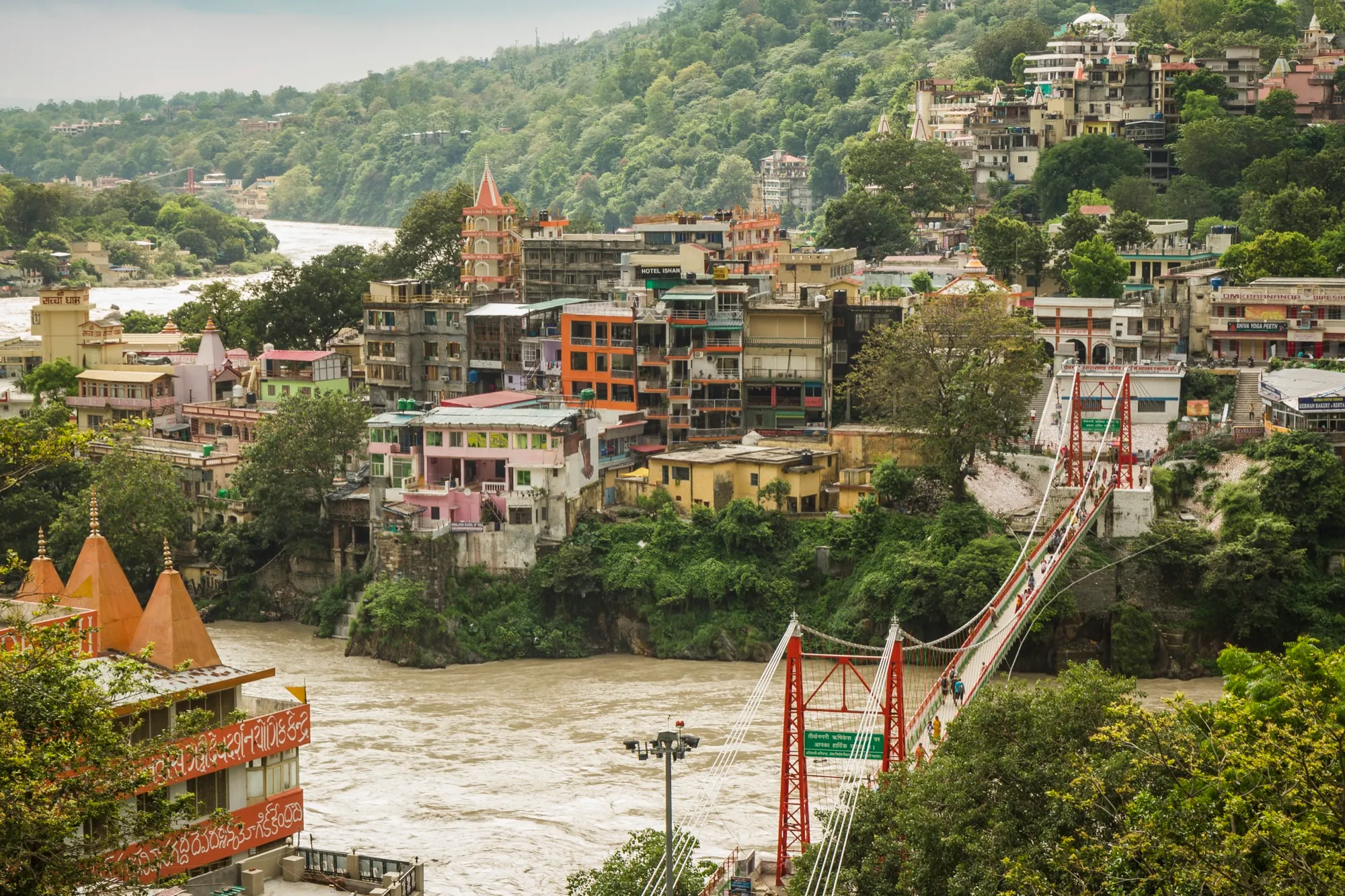
Most things to do in Rishikesh fit into three days: the free evening Ganga aarti at Triveni Ghat or Parmarth Niketan, the Beatles Ashram (₹200 for Indians, ₹1,200 for foreigners), rafting at ₹600 to ₹2,500 a person, and a day at Neelkanth or Kunjapuri. Laxman Jhula has been shut since July 2019 and Ram Jhula since 25 July 2026, so you cross by Bajrang Setu, Janki Setu or boat. Rafting stops on 30 June and reopens in late September, and the river is dangerous in between.
On this page
- TL;DR summary
- Things to do in Rishikesh compared
- Before you plan Rishikesh
- How many days in Rishikesh, getting around and what is shut
- Tapovan and Laxman Jhula
- Ram Jhula, Swarg Ashram and the Beatles Ashram
- Triveni Ghat and Rishikesh town
- River rafting in Rishikesh
- Yoga in Rishikesh
- Neelkanth, Kunjapuri and Neer Garh
- Day trips from Rishikesh
- Rishikesh for weeks
- What to skip in Rishikesh, and how to spend one day
- Frequently asked questions
This is one part of our Rishikesh guide.
TL;DR summary
- Rafting: ₹600 to ₹2,500. A person on a shared raft, 12 to 35 km stretches on the 2026 to 2027 rate list. Closed from 30 June to late September.
- Ram Jhula: Shut to everyone. Closed since about 25 July 2026, reopening targeted for December 2026. Laxman Jhula has been shut since July 2019.
- Beatles Ashram: ₹200 / ₹1,200. Indians pay ₹200 and foreigners ₹1,200. Allow 2 to 3 hours.
- Ganga aarti: Free, at sunset. About 5 pm at Parmarth Niketan and 5:30 pm at Triveni Ghat in winter, roughly an hour later in summer.
- Bungee jump: ₹4,500. 83 m platform at Mohan Chatti, about 45 minutes by road from Tapovan. Ages 12 to 55.
- Meat, eggs and alcohol: Banned in town. Meat, fish and eggs inside the municipal limits; liquor across the municipal corporation area.
Things to do in Rishikesh compared: where, cost, time and best season
| Thing | Where | Cost | Time needed | Best when |
|---|---|---|---|---|
| Bajrang Setu | Tapovan to Jonk | Road deck free; glass walkway ₹100 announced | A short walk | 6 am to 10 pm for the glass |
| Trayambakeshwar temple | Near Laxman Jhula | Free | 1 to 2 hours | Morning, before the midday break |
| Beatles Ashram | East bank, Rajaji reserve | ₹200 Indians, ₹1,200 foreigners | 2 to 3 hours | About 10 am to 4:30 pm |
| Parmarth Niketan aarti | Swarg Ashram side | Free | About 1 hour | About 5 pm winter, 6 pm summer |
| Triveni Ghat aarti | Town, 1 km from the bus stand | Free | 1 to 2 hours | 5:30 pm October to March, 6 to 6:30 pm after |
| River rafting | Shivpuri, Marine Drive, Kaudiyala | ₹600 to ₹2,500 | 2 to 6 hours on the water | October to May |
| Bungee jump | Mohan Chatti | ₹4,500 | Half a day | Any day but Tuesday |
| Yoga drop-in class | Ashrams and studios | ₹200 to ₹500 | One class | Mornings from 6:30 am |
| Neelkanth Mahadev | 26 to 32 km out | Taxi ₹2,200 to ₹2,800 return | Most of a day | February to April, September to November |
| Kunjapuri temple | 25 km out | Taxi fare agreed the evening before | 2 to 3 hours | Sunrise |
| Neer Garh waterfall | North of Tapovan | ₹30 to ₹50 | 1.5 to 3 hours | 7 to 9:30 am, not in the monsoon |
| Haridwar | 20 to 25 km | Shared vikram ₹60 to ₹100 | Half a day | Evening, for the aarti |
| Rajaji safari, Chilla gate | Haridwar side | Entry ₹150 plus ₹250 a vehicle | 2 to 3 hours | 15 November to 15 June |
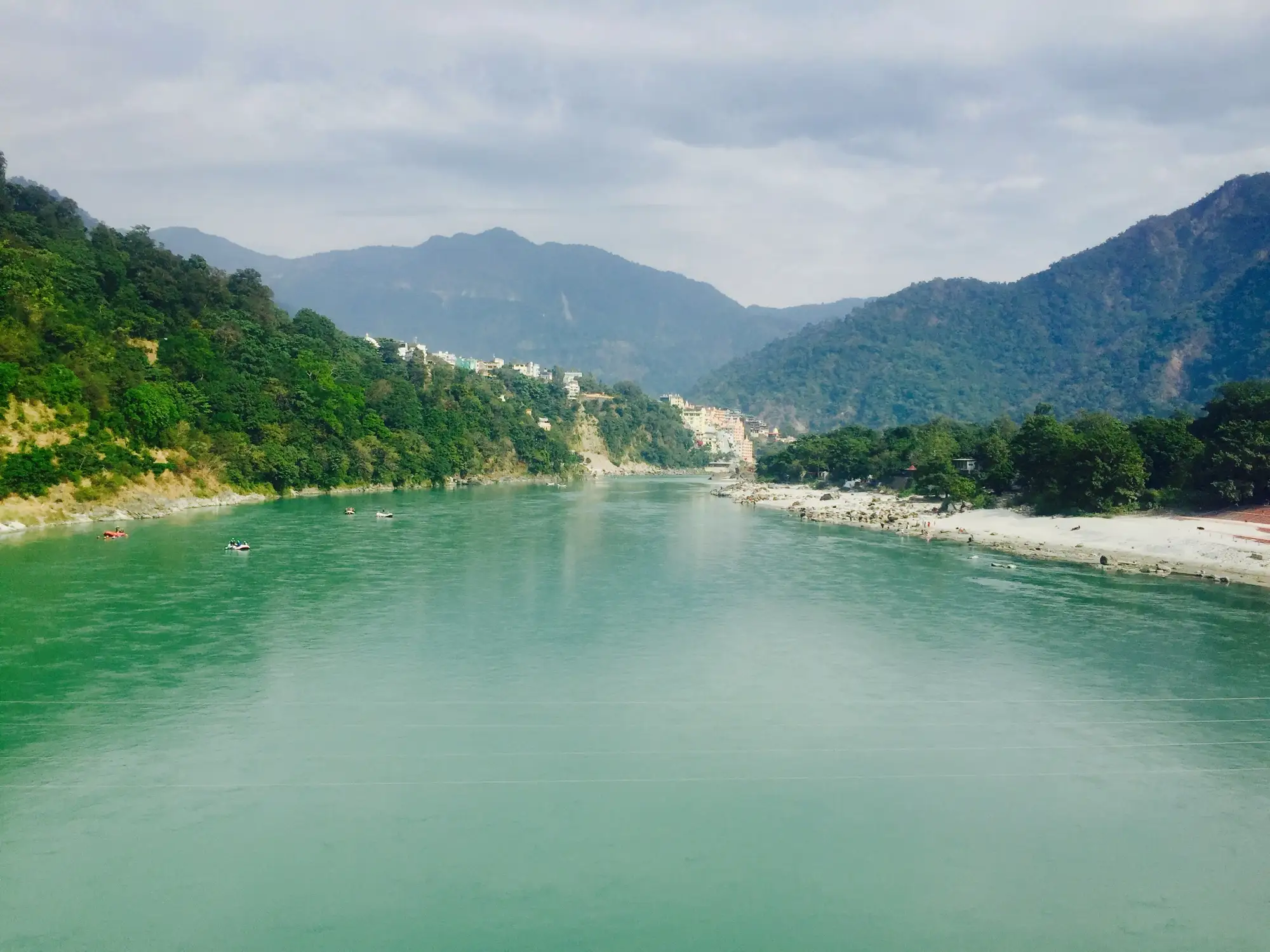
Rishikesh is a river town of ashrams and bridges on both banks of the Ganga, with hill temples behind it. These are the places to visit in Rishikesh, in the order you would move through a day. Most cost nothing or a few hundred rupees. Rafting and bungee cost more, and the river is the one real danger. The town suits first-timers, yoga students, rafters and anyone staying a few weeks with a laptop. It suits you less from July to mid-September, when rafting is shut and the Ganga runs high, and in the Kanwar Yatra weeks.
Before you plan Rishikesh: bridges, rafting season and food rules
Two bridges are shut, and you cross another way. Laxman Jhula has been closed since July 2019 because its parts were failing. Ram Jhula has been closed to everyone, pedestrians included, since about 25 July 2026 for repairs, with reopening targeted for December 2026. Bajrang Setu, built beside the old Laxman Jhula, links Tapovan on the west bank with Jonk on the east. Pedestrians have used it since early 2026, and two-wheelers use its central deck. Janki Setu takes pedestrians and two-wheelers and is the crossing to the Ram Jhula and Swarg Ashram side for now, and boats also cross. With luggage or a car, go by road over the barrage.
Rafting runs from late September to 30 June. The rafting committee and district officials close the river around 30 June for the monsoon. It reopened on 16 September in 2023, 27 September in 2025 and 23 September in 2026, and in 2026 it paused again three days later under a red weather alert. Plan rafting for October to May and treat the first weeks after reopening as unreliable.
There is no meat, fish, eggs or alcohol. Meat, fish and eggs have been banned inside the municipal limits of Rishikesh and Muni ki Reti since a 1956 notification, which the Supreme Court upheld in 2004. Liquor is banned across the municipal corporation area. Rajaji Tiger Reserve and the Beatles Ashram forbid both as well. Cafes here are vegetarian; the food and cafes guide has the detail.
The Kanwar Yatra fills the roads. In 2026 it ran from 30 July to 11 August, and all vehicles were banned on the Delhi to Haridwar highway from 4 to 12 August. In 2027 Sawan Shivratri falls on 31 July, so expect the last days of July to be the worst. Neelkanth queues stretch to 10 or 12 hours in that month.
How many days in Rishikesh, getting around and what is shut
How many days. Three days covers the circuit: the west bank and bridges, then the east bank with the Beatles Ashram and an aarti, then the river or the hills. A fourth day suits Neelkanth, Kunjapuri or Haridwar. The itinerary sets this out day by day, and how to reach Rishikesh covers the trains and roads.
Getting around. Shared autos called vikrams run fixed routes between Laxman Jhula, Ram Jhula, Tapovan, Muni ki Reti and the market, at ₹10 to ₹30 a hop from about 6 am to 9 or 10 pm. A private auto from the bus stand to the bridges costs ₹150 to ₹300, and a trip between zones ₹200 to ₹500 after bargaining. Scooters cost ₹300 to ₹800 a day with a helmet, and bicycles ₹100 to ₹300.
What is shut, by season. From July to late September rafting is closed, the Ganga is high and waterfall trails are slippery. The Rajaji safari runs only from 15 November to 15 June. The bungee site is closed on Tuesdays. From April to June midday is hot enough that we’d do the aarti, the Beatles Ashram and the ghats early or late. In winter the evening aarti moves earlier by about an hour. Month by month detail is in best time to visit Rishikesh.
Tapovan and Laxman Jhula: Bajrang Setu and Trayambakeshwar
Tapovan and the west bank of the old Laxman Jhula hold most of the cafes and guesthouses, so a long stay usually starts here. Distances below are from Tapovan.
Walk across Bajrang Setu, the bridge that replaced Laxman Jhula
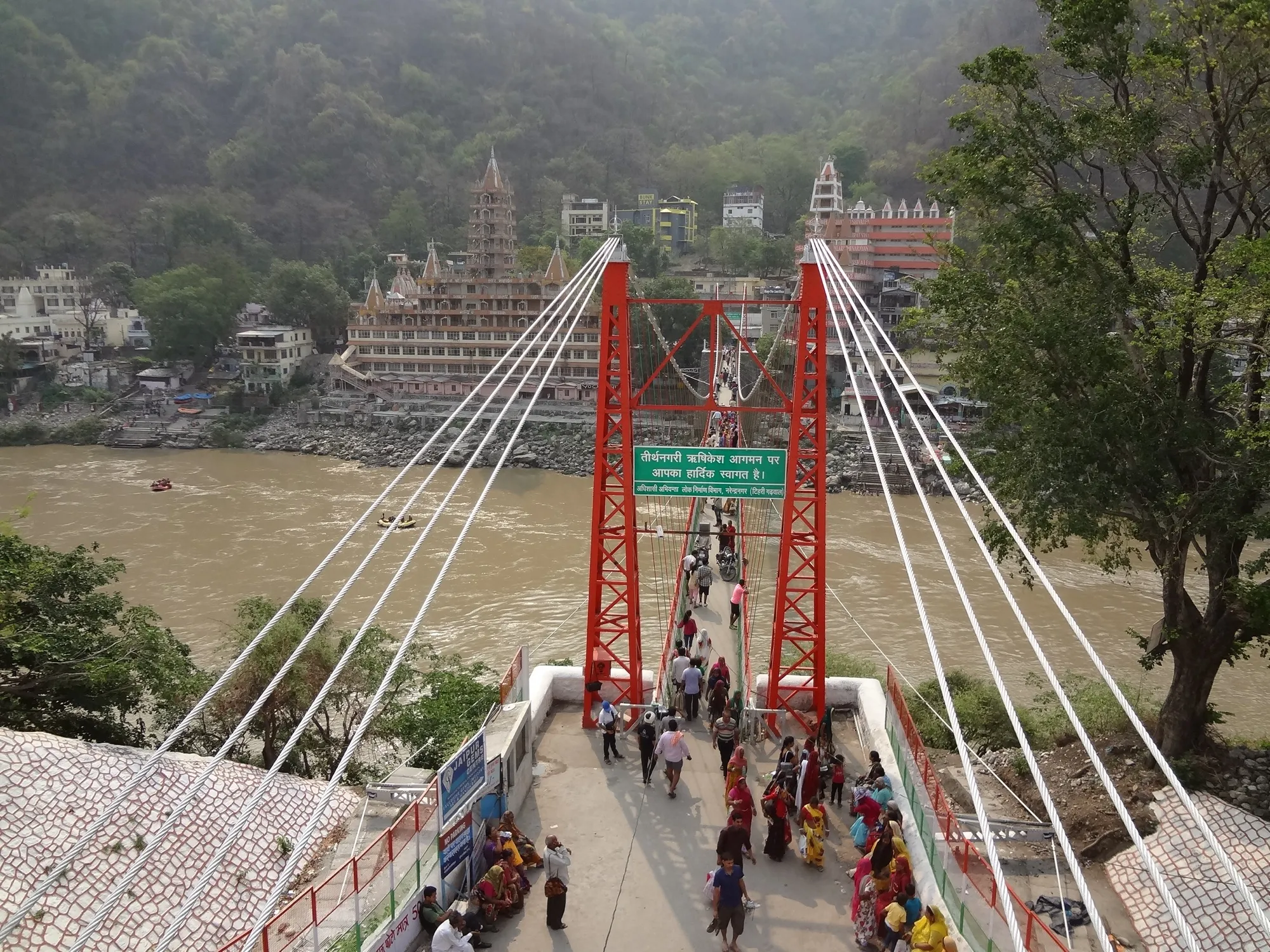 Laxman Jhula in 2016, before it was closed. Bajrang Setu now stands beside it. Photo: Nilesh Keshri, CC BY-SA 4.0, via Wikimedia Commons.
- Cost: the road deck is free; a ₹100 adult fee (₹50 for a child) for the glass walkways was announced on 29 July 2026
- From Tapovan: the bridge starts on the Tapovan bank beside the old Laxman Jhula
- Open: glass walkways 6 am to 10 pm; the central deck for two-wheelers is open all day
Cross it once for the river view and as your way to the east bank. The bridge is 132 m long and 8 m wide. The old 1929 suspension bridge still hangs beside it, but nobody can cross it. Glass panels on the new bridge have cracked more than once in 2026 and the bridge has no formal inauguration, so rules and fees may change. Ask your host whether the glass fee is running before you queue for it.
Visit Trayambakeshwar, the 13 floor temple near Laxman Jhula
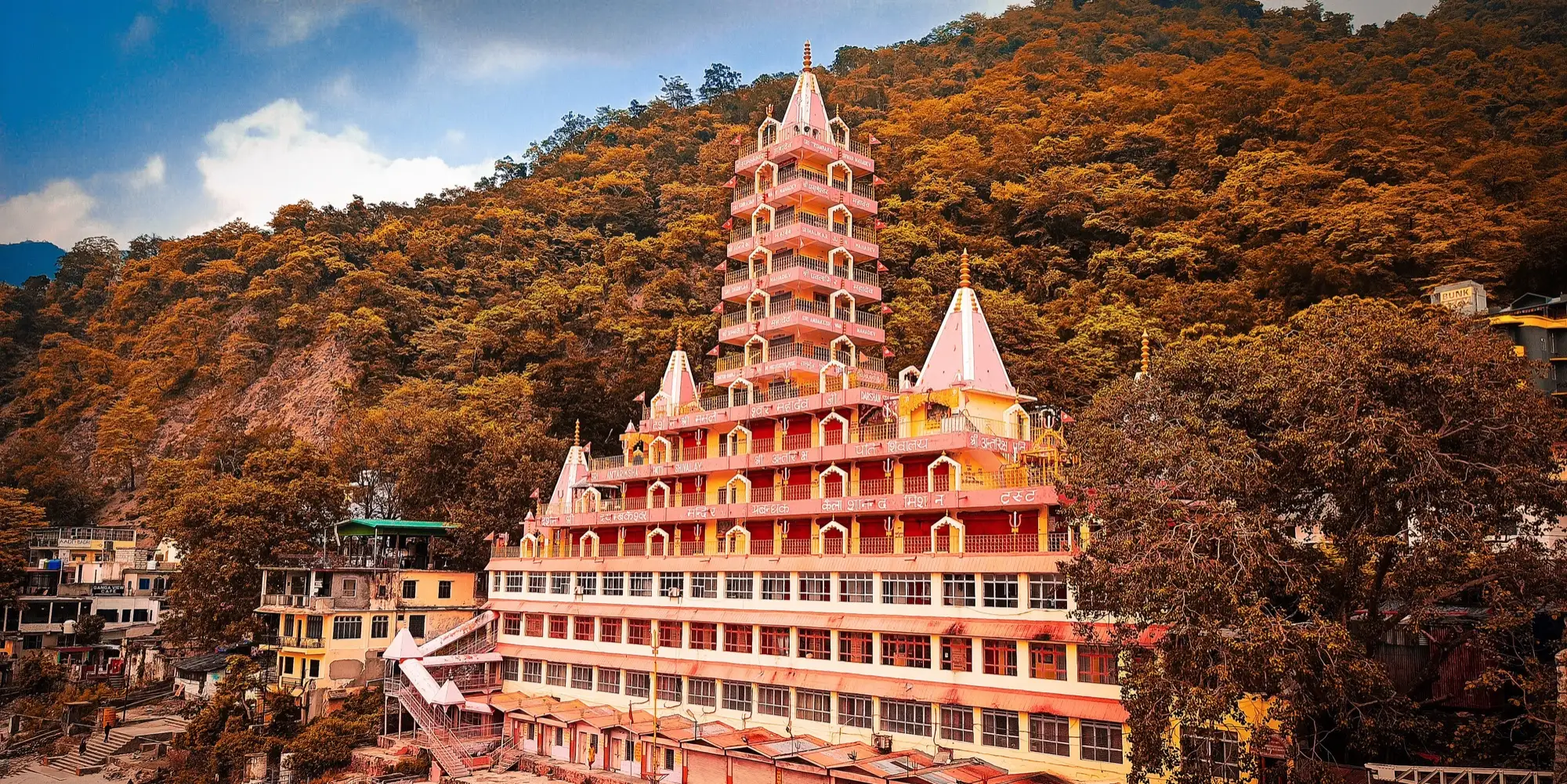 Trayambakeshwar, the 13 floor temple by Laxman Jhula. Photo: VikramSingh Valera, CC BY-SA 4.0, via Wikimedia Commons.
- Cost: free
- Time: 1 to 2 hours
- Best hour: morning; open 6 am to 7 pm, with a possible closure from 12 to 2 pm
Treat it as a quick stop, not a day out. The temple rises 13 floors in a mix of Nagara and Dravidian styles.
Ram Jhula, Swarg Ashram and the Beatles Ashram: the east bank
Swarg Ashram, Parmarth Niketan and the Beatles Ashram sit on the east bank, and the lanes of Swarg Ashram are for pedestrians only. Ram Jhula is the bridge you would normally cross to get here. While it is shut, take Janki Setu, the boat or Bajrang Setu followed by a road ride south.
Beatles Ashram (Chaurasi Kutia): ₹200 or ₹1,200 entry
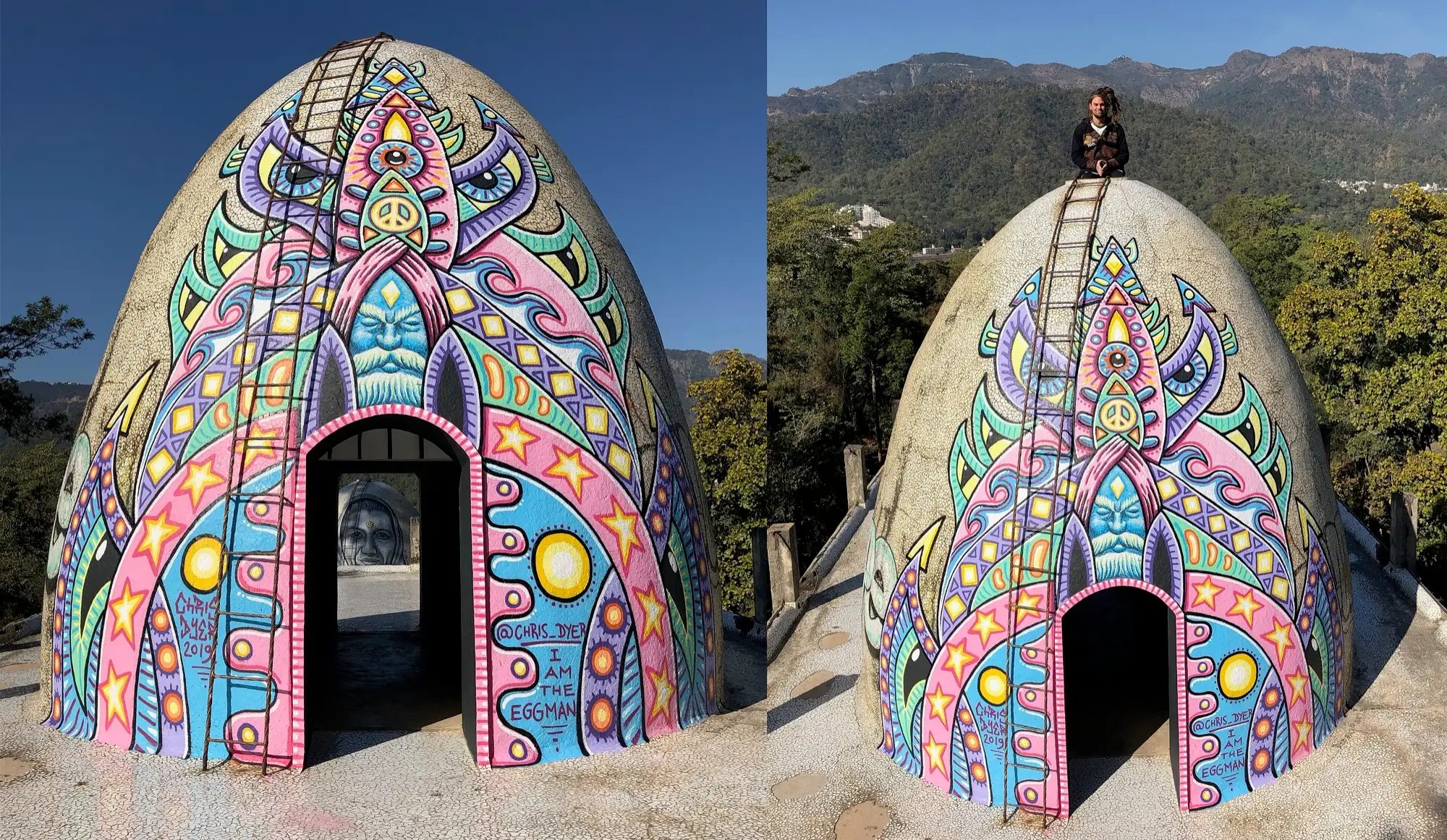 Painted meditation domes at the Beatles Ashram. Photo: Chris Dyer Peru, CC BY-SA 4.0, via Wikimedia Commons.
- Cost: ₹200 for Indians, ₹1,200 for foreigners; an SLR camera adds ₹1,000 (Indians) or ₹2,000 (foreigners)
- Time: 2 to 3 hours
- Open: about 10 am to 4:30 pm; the forest department’s rule is after sunrise and before sunset
Go if the Beatles story is why you came, and skip it if not, because at ₹1,200 and up to three hours it is the dearest entry ticket in town for foreign visitors. The Maharishi leased the site from 1961, and it opened to the public in December 2015 inside Rajaji Tiger Reserve. The forest department runs it, and alcohol and non-vegetarian food are not allowed. The Chaurasi Kutiya zone stays open all year, while the rest of the reserve closes to day visitors from 16 June to 14 November.
Parmarth Niketan’s evening Ganga aarti: quieter than Triveni
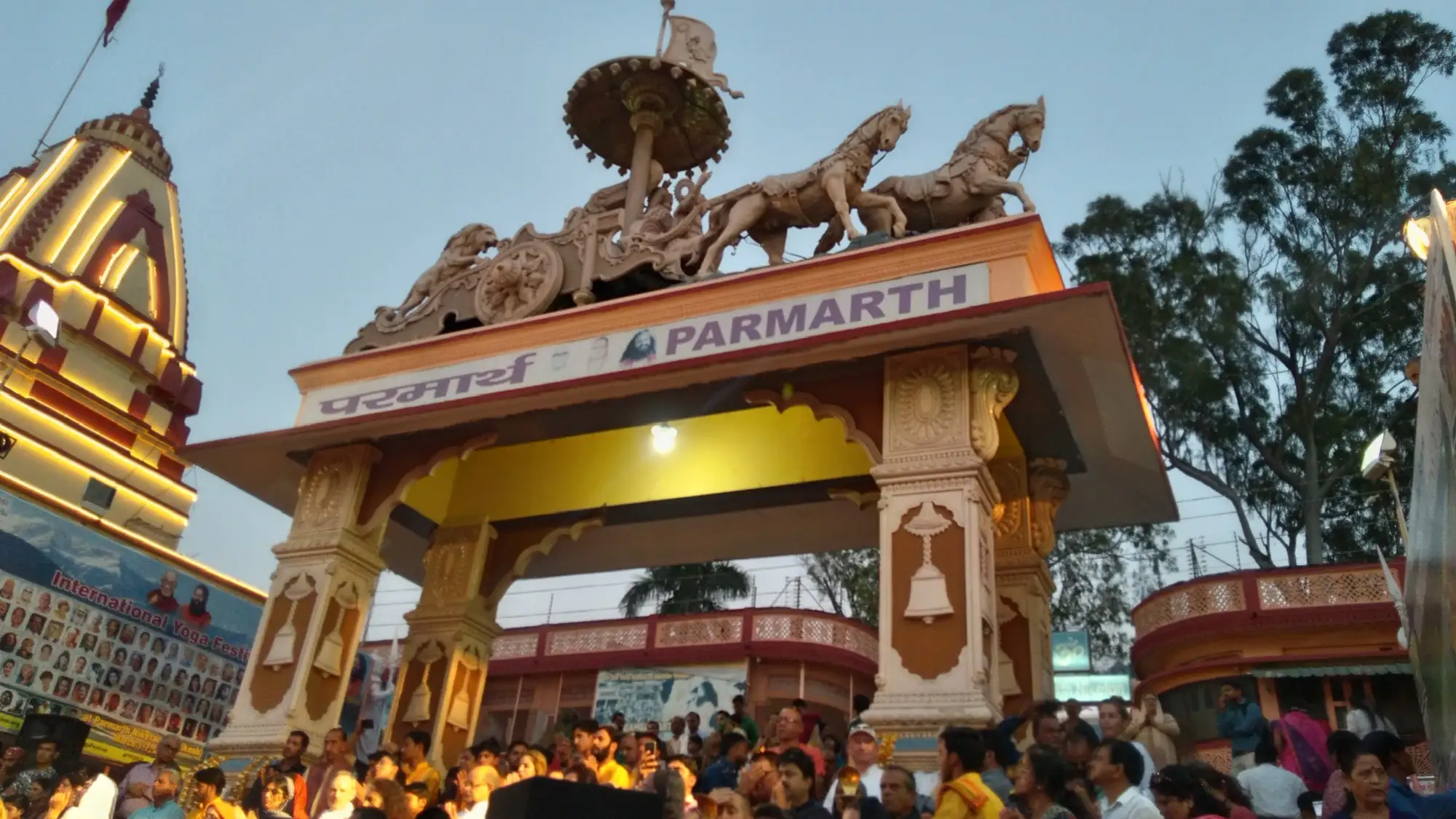 The entrance to Parmarth Niketan, busy before the evening aarti. Photo: Ashish Bhatnagar, CC BY-SA 3.0, via Wikimedia Commons.
- Cost: free
- Time: about an hour; arrive 30 to 60 minutes early
- Best hour: about 5 pm in winter and 6 pm in summer, roughly half an hour before Triveni; morning aarti 5:45 to 6:30 am
Parmarth is the smaller, more meditative ceremony, led by ashram students. The best seats are the lower marble steps or near the Shiva statue. Drones and tripods are not allowed, and shoulders and knees should be covered. In the monsoon the river climbs fast: on 5 and 6 August 2025 the Ganga touched the Shiva statue here and the ghat entrances were locked.
Walk the riverside path from Ram Jhula to Laxman Jhula
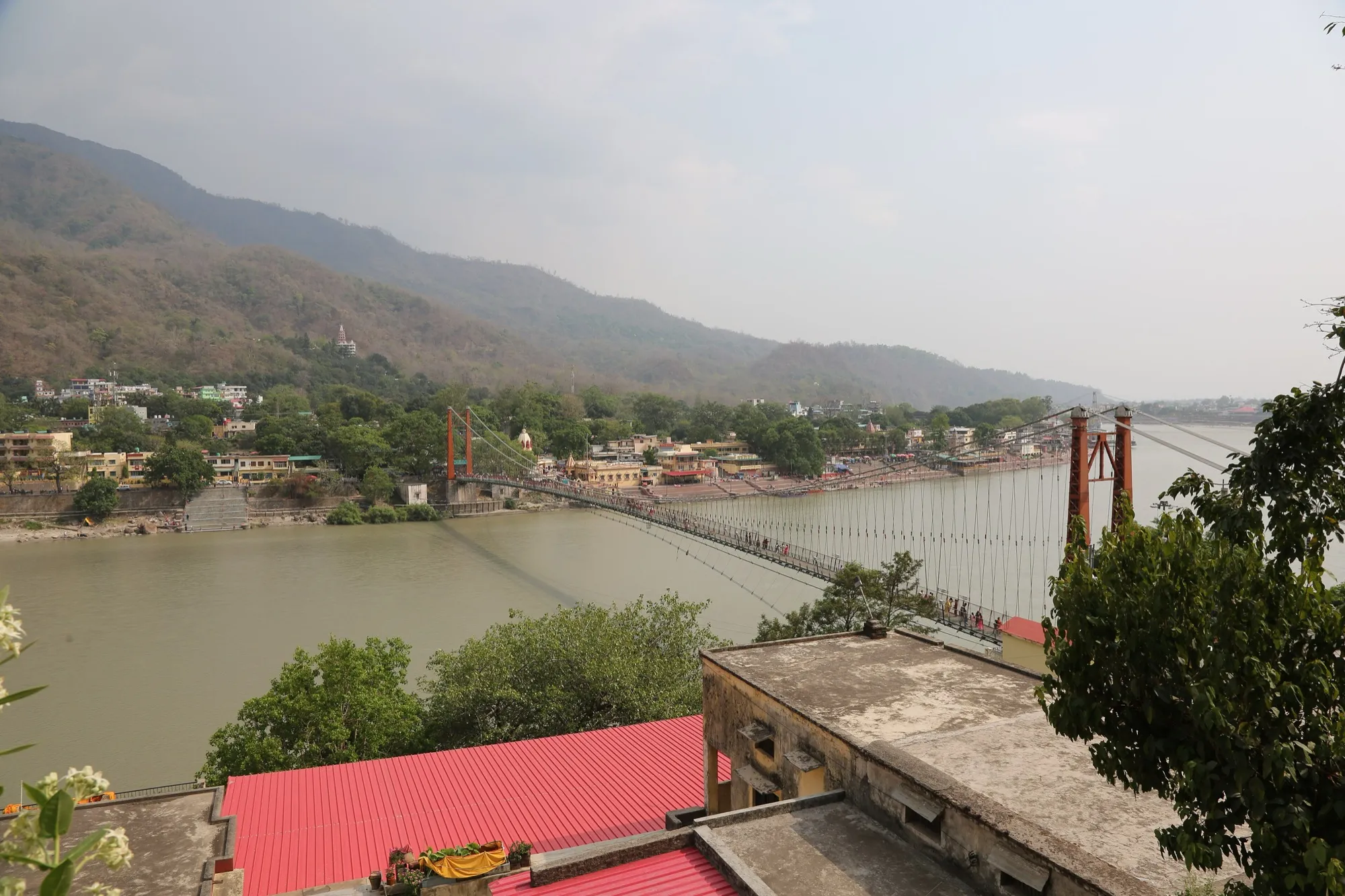 Ram Jhula in May 2025, before its closure for repairs. Photo: Paradise Chronicle, CC BY-SA 4.0, via Wikimedia Commons.
- Cost: free
- Distance: about 2.5 to 3 km, roughly 35 minutes
- Best hour: dawn or dusk
With both old bridges shut, this is no longer a loop. Walk it one way and ride back by vikram.
Triveni Ghat and Rishikesh town: the big aarti and Bharat Mandir
Watch the Ganga aarti at Triveni Ghat: free, at sunset
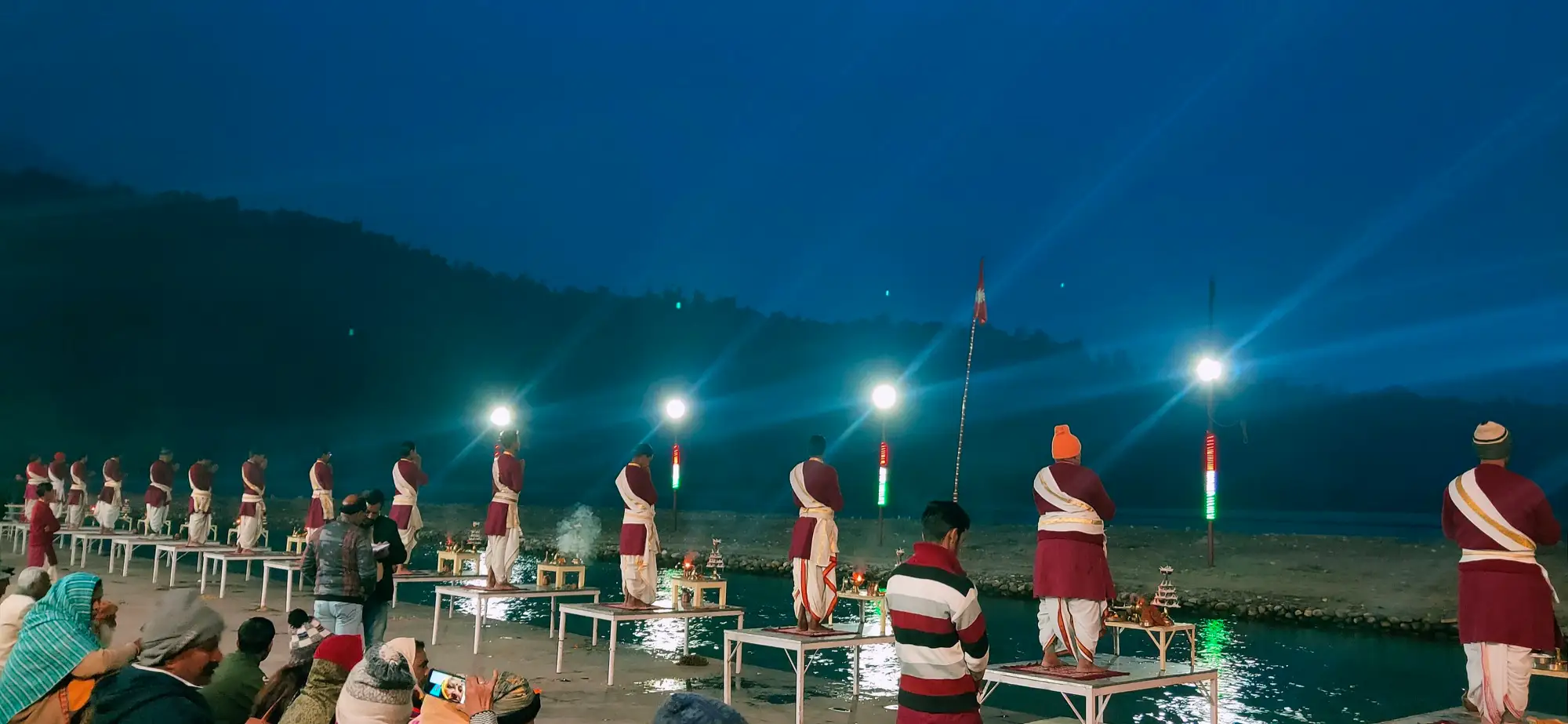 The Ganga aarti at Triveni Ghat. Photo: Bhuvi Uniyal, CC BY-SA 4.0, via Wikimedia Commons.
- Cost: free; shared boats ₹50 to ₹100; floating lamps from vendors ₹10 to ₹20
- From the bus stand: about 1 km (about 2 km from the railway station)
- Time: 1 to 2 hours at the ghat
- Best hour: about 5:30 pm from October to March and about 6 to 6:30 pm from April to September; the morning aarti runs 5:45 to 6:30 am
This is the bigger, louder aarti, with drums and conches, and it is free. Arrive 30 minutes early on weekdays and 45 on weekends and festivals. The crowd funnels toward the Shiva statue, so the left side clears within about ten minutes. Do not pay for a ticket or a seat. The ghat is open 24 hours; take your shoes off and cover shoulders and knees. We’d see Triveni once for the scale and Parmarth if you want a second evening.
Bharat Mandir, the old Vishnu temple near Triveni Ghat
- Open: 5 am to 12 noon and 4 pm to 9 pm
Tradition ties it to Adi Shankaracharya, and it was restored in 1832. We’d visit it before the evening aarti, since it sits near Triveni Ghat.
River rafting in Rishikesh: stretches, prices, season and safety
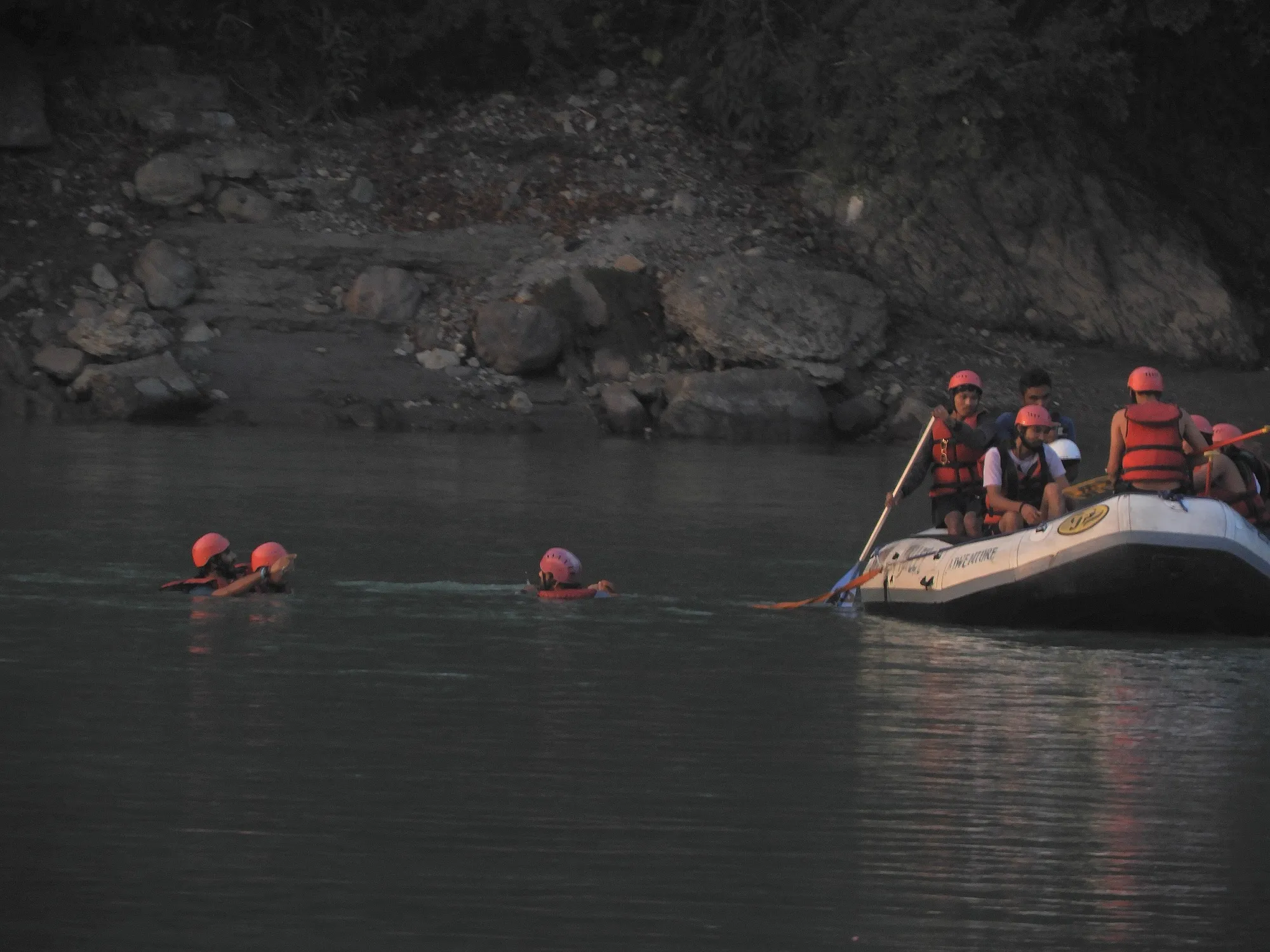 Rafting on the Ganga near Ram Jhula. Photo: Goutam1962, CC BY-SA 4.0, via Wikimedia Commons.
Rafting stretches and 2026 to 2027 prices
- Cost: ₹600 to ₹2,500 a person on a shared raft; some quotes run higher on the longest stretch
- Time: about 2 to 6 hours on the water, half a day with transfers
- Best season: October to May
Every run on the 2026 to 2027 rate list ends at Neem Beach. Phool Chatti to Neem Beach is 12 km for ₹600, Shivpuri is 16 km for ₹1,000, Marine Drive is 26 km for ₹1,500 and Kaudiyala is 35 km for ₹2,500. Operators put the runs at about 2, 3, 4 and 6 hours. The short stretch is the gentlest, and the 16 km Shivpuri run, with rapids such as Roller Coaster and Golf Course, is the most popular. We’d take that one for a first time. Rafting rules require a minimum age of 14, helmets, certified life jackets, registered guides and no overloaded rafts.
River safety: where not to swim
Five or more people drowned at restricted river beaches between May and September 2026, mostly day visitors from Delhi and western Uttar Pradesh, and mostly in May and June when the water looks calm. Police and rescue teams treat several beaches as no-bathing zones, and the Ganga is cold, fast and rises quickly after rain upstream. Stay out of the water at open sand beaches and mid-river. If you bathe at all, use a chained ghat such as Triveni.
Bungee jumping in Rishikesh: 83 m at Mohan Chatti, ₹4,500
- Cost: bungee ₹4,500, rope jump ₹4,500, flying fox ₹2,500 tandem or ₹4,000 solo; any two for ₹7,000, all three for ₹9,000
- From Tapovan: the jump zone is about 45 minutes by road; free transport for jumpers, with pick-ups from the Tapovan office at 9:00, 11:00, 13:00 and 14:30
- Best day: any day but Tuesday; jumps continue in the monsoon
Jumpin Heights has operated since 2010 and prices include video and GST. The platform is about 83 m high. Ages 12 to 55 and weights 40 to 110 kg are accepted. On 12 November 2025 a bungee cord snapped at a different operator at Shivpuri, a visitor broke ribs and a hand, and the Tehri district magistrate ordered an inquiry and a safety audit of adventure centres. Ask any operator for its licence and when its cords were last checked before you pay.
Yoga in Rishikesh: drop-in classes, ashram days and teacher courses
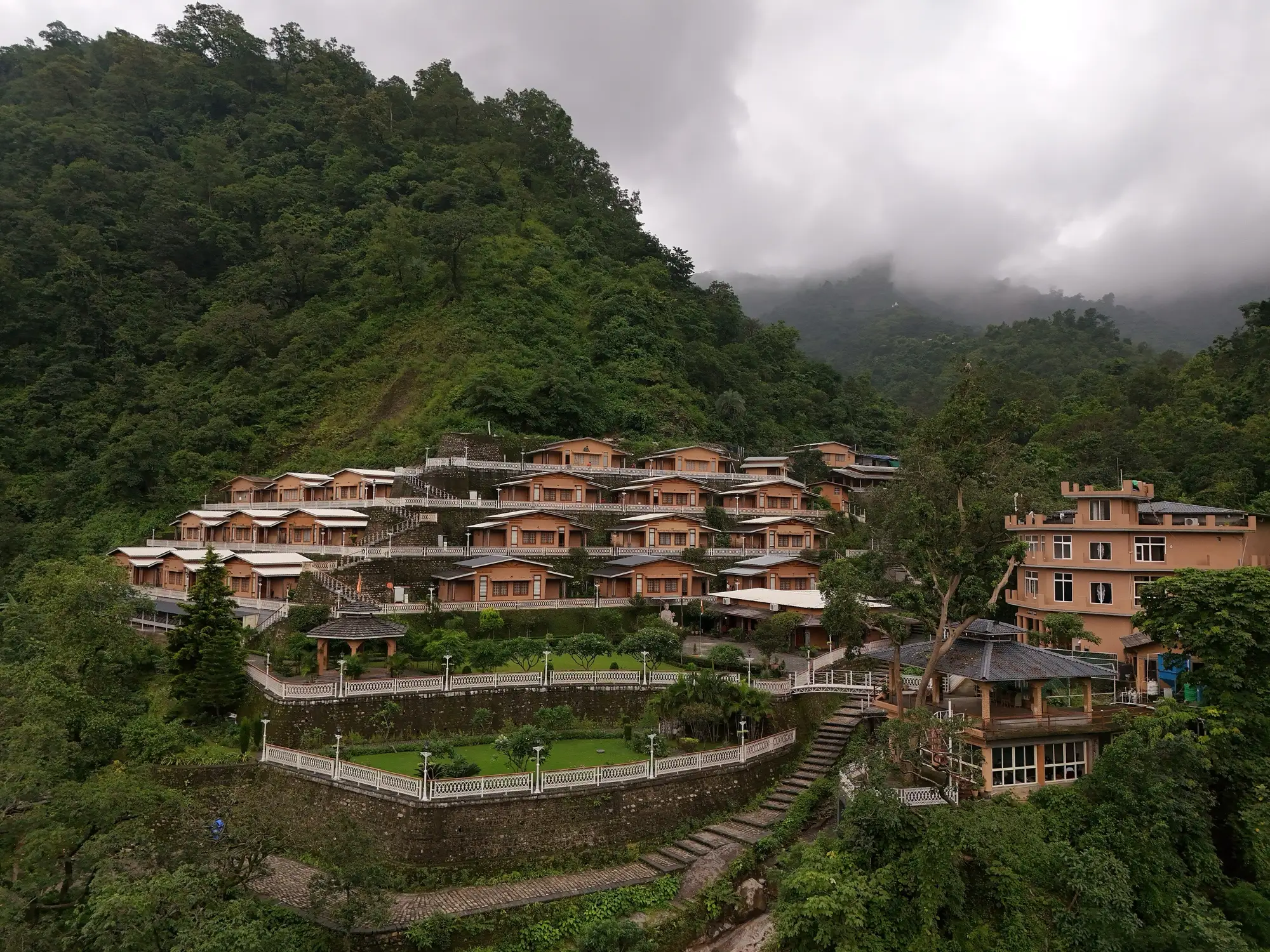 A yoga ashram on the hillside at Rishikesh. Photo: Abhayaranya.yoga.ashram, CC BY-SA 4.0, via Wikimedia Commons.
- Cost: drop-in classes ₹200 to ₹500
- Best hour: morning, from 6:30 am
Drop-in classes are the easy way in. Parmarth Niketan runs a full day from a 5:00 wake-up bell, with meditation at 5:30, yoga from 6:30 am and evening yoga, and its gate closes at 10 pm. Reserve about a week ahead. Sivananda Ashram charges nothing for any seva and expects vegetarian food, no alcohol or tobacco, and covered shoulders, midriff and legs. Book only through its official sites, sivanandaonline.org or dlshq.org, because a copycat site has taken room bookings.
The International Yoga Festival runs 9 to 15 March 2027 at Parmarth Niketan, with registration online. If you want a teaching qualification, 200-hour courses last about four weeks and cost roughly USD 800 to 1,400 with a room and vegetarian meals, with luxury rooms higher.
Neelkanth, Kunjapuri and Neer Garh: hill temples and a waterfall
These three need a vehicle, and the walking versions of each are in the treks and walks guide.
Neelkanth Mahadev temple: a full day, and not in Sawan
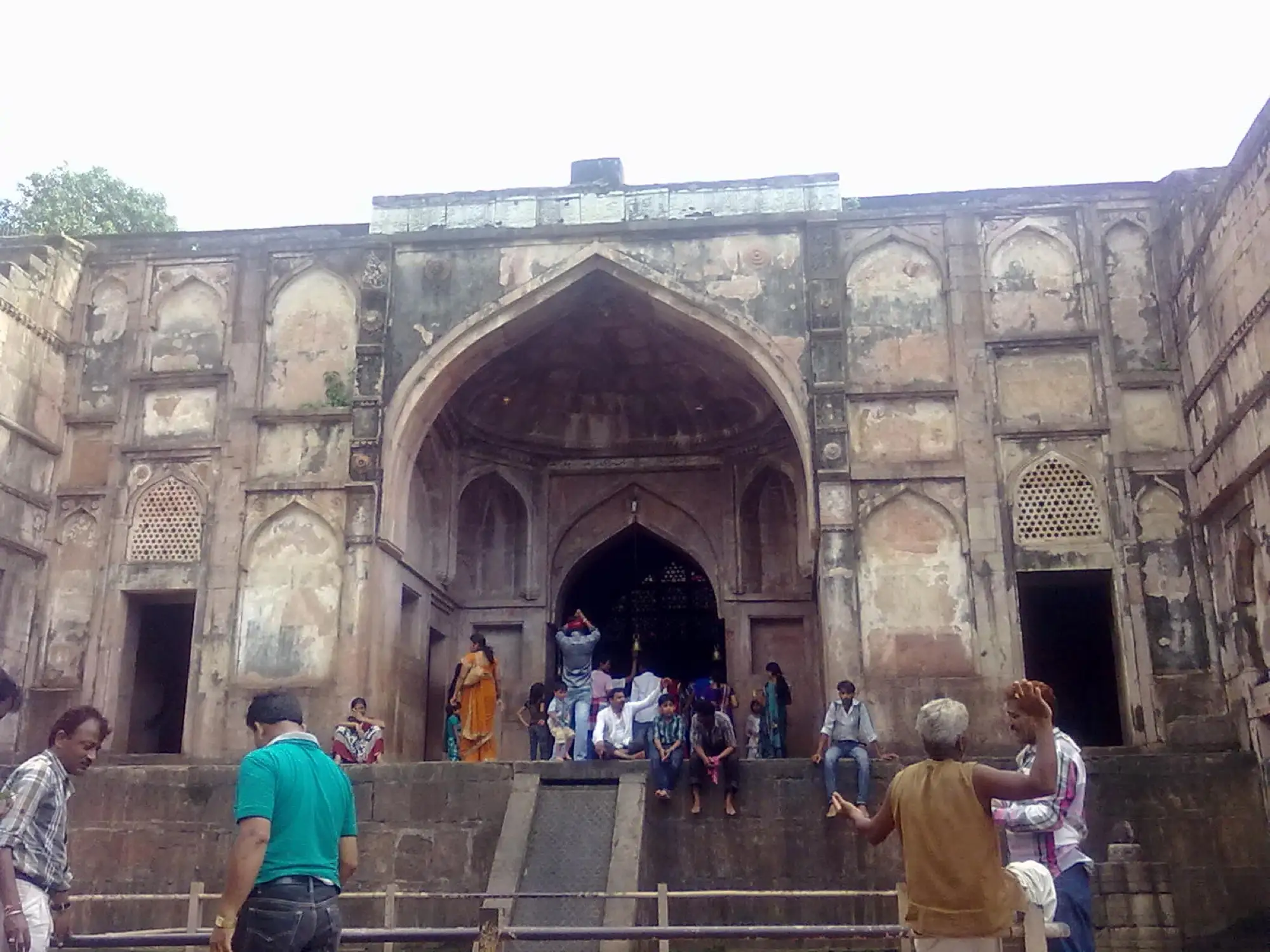 The Neelkanth Mahadev temple. Photo: Anurodhraghuwanshi, CC BY-SA 3.0, via Wikimedia Commons.
- Cost: temple free; taxi ₹2,200 to ₹2,800 round trip; shared jeep ₹80 to ₹250 a seat
- From Rishikesh: 26 to 32 km, 1 to 2 hours each way
- Time: most of a day
- Best season: February to April, September to November; open about 5 am to 6 pm, possibly closed a few hours at midday
The road runs through Rajaji elephant country and carries the pilgrim traffic. In Shravan, queues run 10 to 12 hours and the road shuts for long spells during the Kanwar Yatra. Maha Shivratri on 6 March 2027 brings multi-hour queues too. Shoulders and knees must be covered. We’d go on a weekday outside both.
Kunjapuri temple: sunrise at 1,676 m
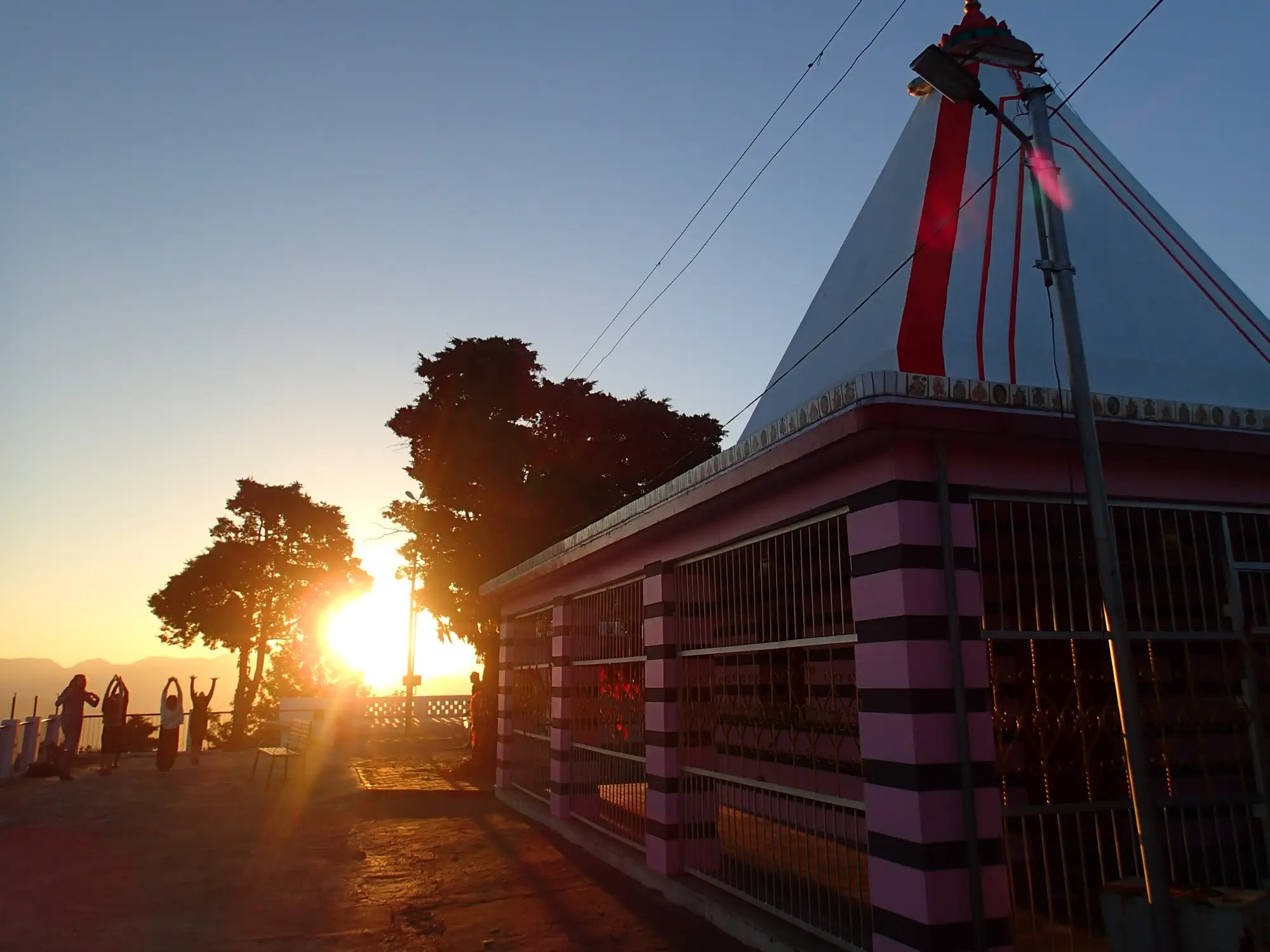 Kunjapuri temple in October 2014. Photo: Travel & Shit, CC BY-SA 2.0, via Wikimedia Commons.
- Cost: a taxi, with the fare agreed the evening before
- From Rishikesh: 25 km, 45 to 60 minutes
- Time: 2 to 3 hours
- Best hour: sunrise, leaving about 4:30 am; the temple is open 6 am to 6 pm
The temple is up a flight of steps from the road, counted at anywhere from 80 to about 300. The sunrise view takes in Swargarohini, Bandarpunch, Gangotri and Chaukhamba. It lies in a different direction from Neelkanth, so keep them to separate days. Avoid July and August, when the road is poor.
Neer Garh waterfall: go before 9:30 am
- Cost: ₹30 to ₹50 entry; an auto from Tapovan is ₹200 to ₹300 return with a wait
- From Tapovan: a few kilometres north on the Badrinath road
- Time: 1.5 to 3 hours round trip
- Best hour: 7 to 9:30 am; open from 7 or 8 am to 5 pm, last entry 4 pm
It is the easiest waterfall near Rishikesh: a marked trail of stone steps, 1 to 1.5 km from the gate, with small shops at the falls for water, tea and noodles. It is busiest from 11 am to 4 pm, and in the monsoon the steps turn slippery. Patna and Garud Chatti are other waterfalls on the same side, covered in the treks guide.
Day trips from Rishikesh: Haridwar, Devprayag and the Rajaji safari
Haridwar and the Har ki Pauri aarti: 20 to 25 km away
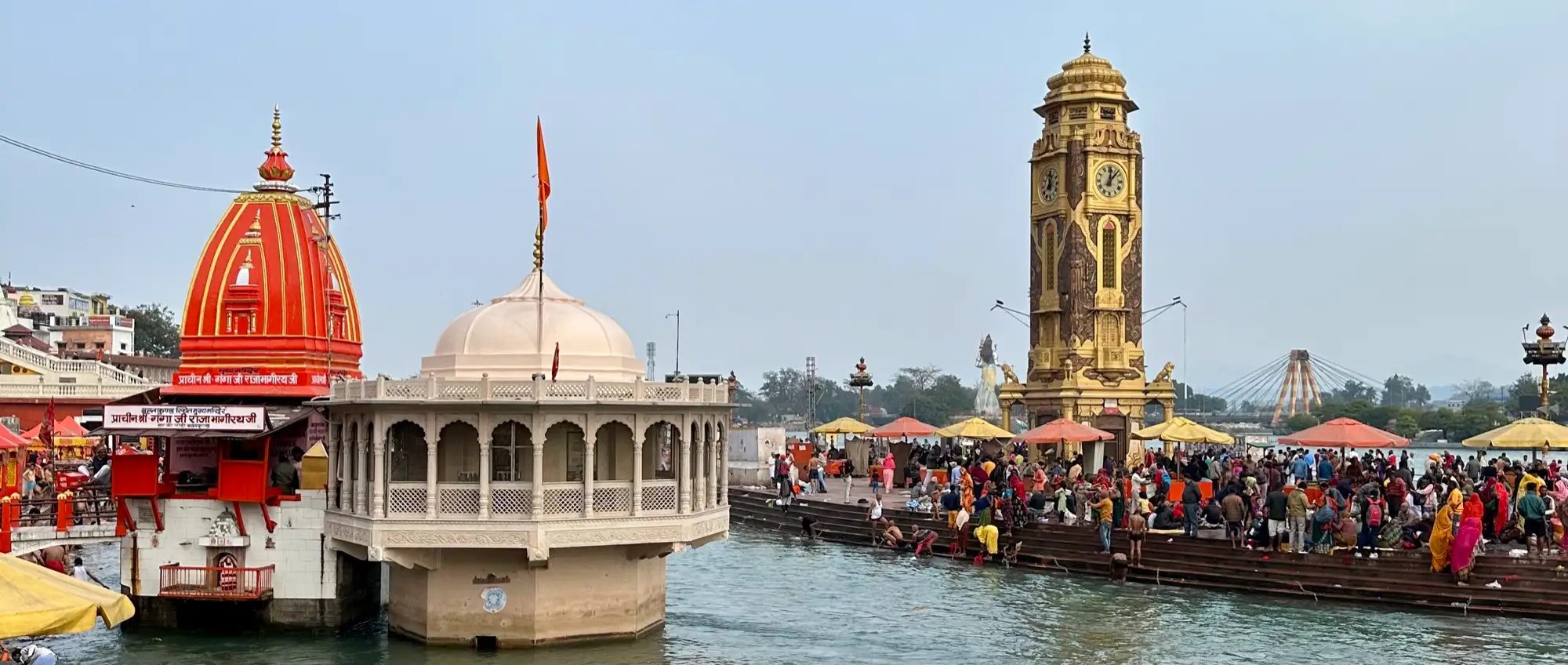 Har ki Pauri and the clock tower at Haridwar. Photo: Whispyhistory, CC BY-SA 4.0, via Wikimedia Commons.
- Cost: shared vikram ₹60 to ₹100; taxi ₹400 to ₹1,500, agreed first
- Time: about 1 hour each way; half a day
- Best hour: evening, for the aarti at sunset
It is the easiest day trip. Har ki Pauri holds a sunset aarti each evening with crowds on both banks, and Brahmakund is the main bathing spot. Haridwar’s Ardh Kumbh bathing days in 2027 are 6 and 8 March and 14 April, so book ahead then.
Devprayag: where the Alaknanda meets the Bhagirathi
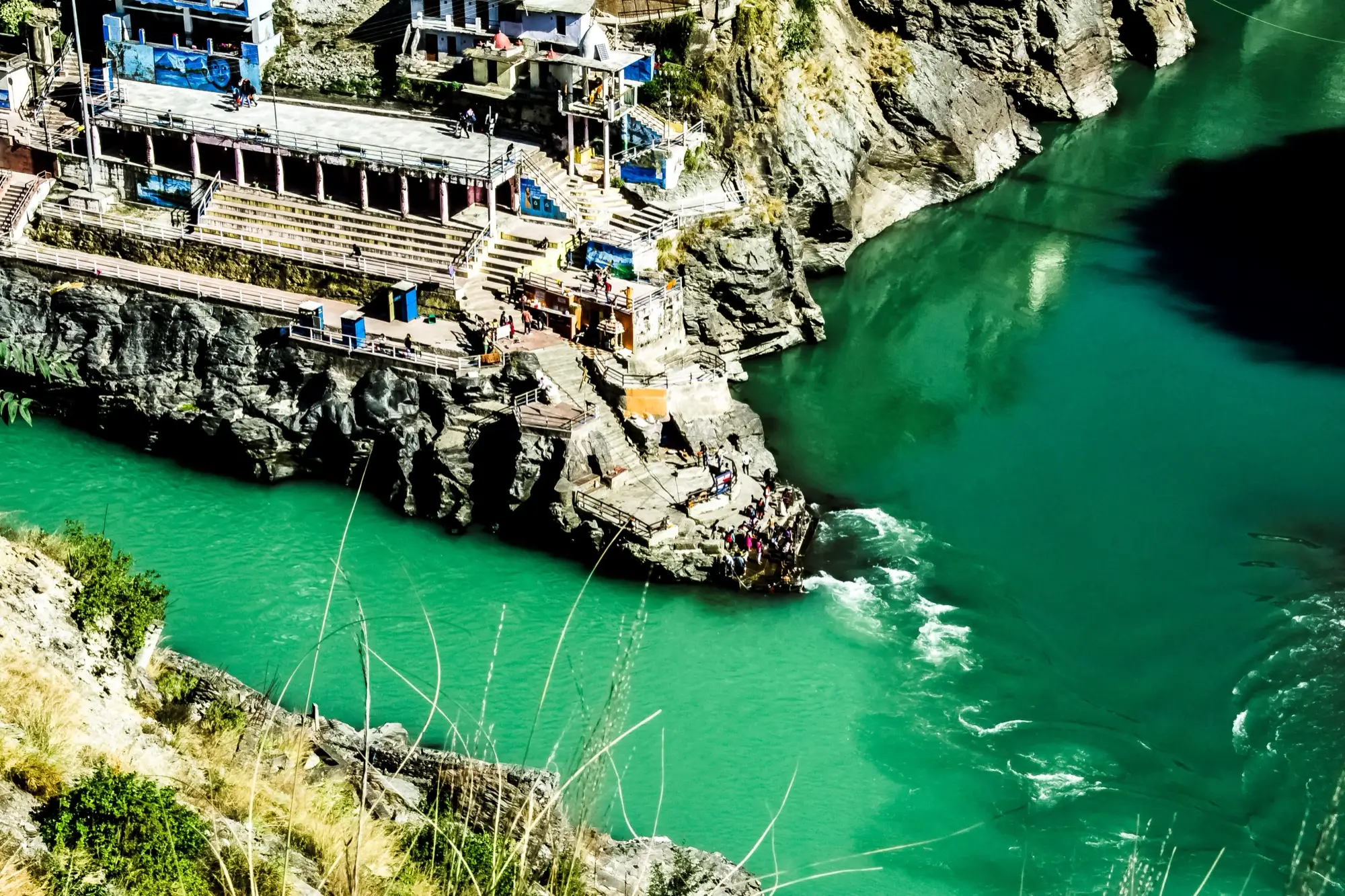 Devprayag, where the Alaknanda and the Bhagirathi join to form the Ganga.
Devprayag stands at 830 m, 70 km from Rishikesh on the Badrinath road. It is a long day for one place, so we’d go only with a spare day and a car, and not in the rains.
Rajaji safari at the Chilla gate: 15 November to 15 June
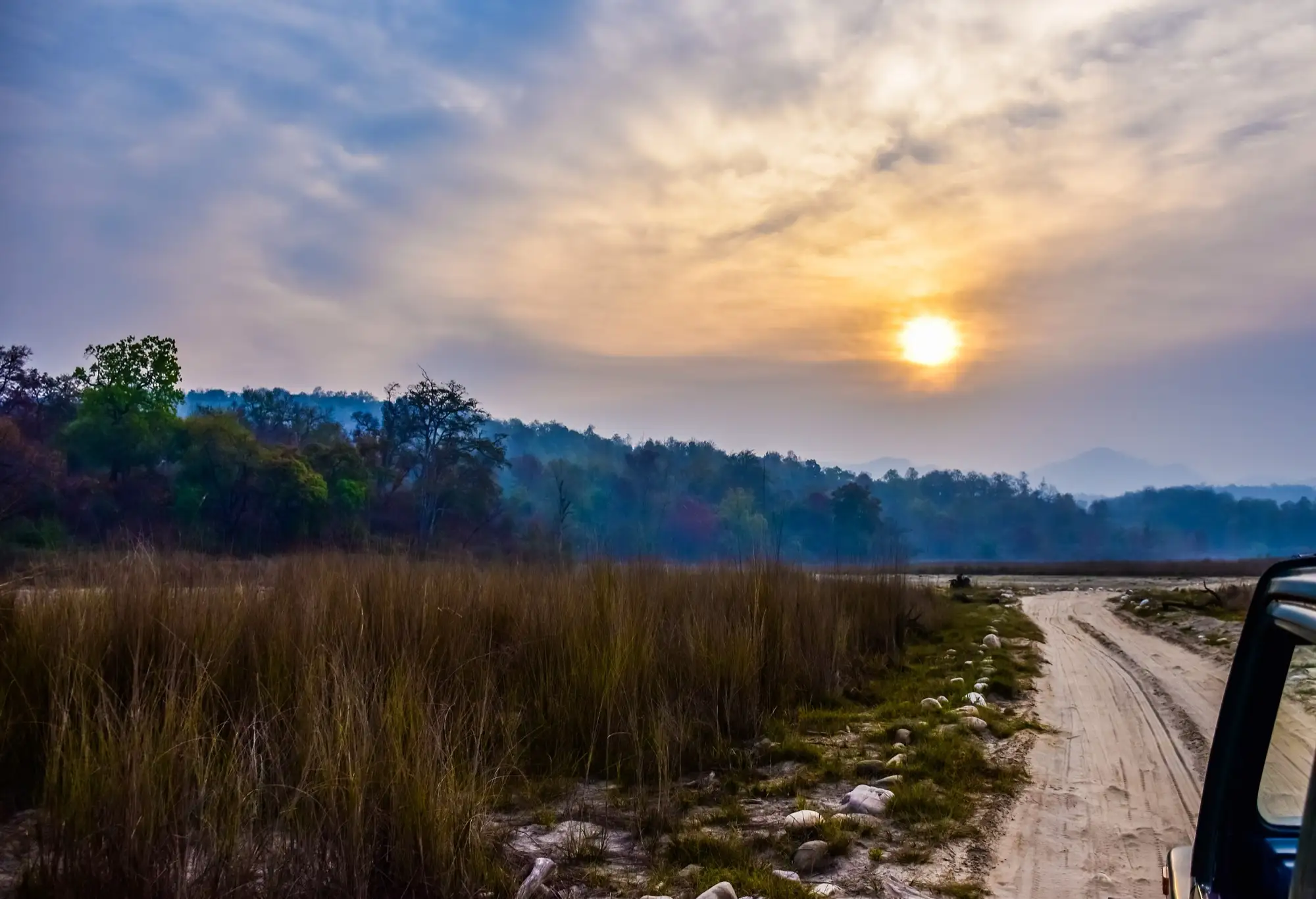 Rajaji National Park. Photo: Tarun802, CC BY-SA 4.0, via Wikimedia Commons.
- Cost: entry ₹150 a person and ₹250 a vehicle for Indian visitors, ₹600 and ₹500 for foreigners, plus GST; jeep hire is extra
- Time: tours last 2 to 3 hours
- Best hour: the first slot; from 15 November to 15 February mornings are 6:30 to 8:00 and afternoons 1:30 to 3:00
Chilla is on the Haridwar side of the reserve. Entry times shift earlier as the days lengthen, to 5:30 to 7:00 am from 16 April; book on the reserve’s portal. Alcohol and non-vegetarian food are prohibited. It is not a monsoon activity.
Rishikesh for weeks: dawn and dusk plans, and weekend trips
Mornings give the most. The morning aarti at Triveni runs 5:45 to 6:30, Parmarth has meditation at 5:30 and yoga from 6:30, Neer Garh is best from 7 to 9:30, and the riverside path is best at dawn. After 6 pm there is the evening aarti, and the Bajrang Setu walkway stays open until 10 pm.
Save the vehicle trips for weekends. Ranked by effort: Haridwar first, then Neelkanth or Kunjapuri by taxi, then Devprayag, with Chopta as an overnight and an early start. For where to base yourself, see where to stay in Rishikesh.
What to skip in Rishikesh, and how to spend one day
We’d skip the beaches for swimming, Devprayag unless you have a spare day, the glass walkway if the fee is running and you only want to cross, and the Beatles Ashram if you are not a Beatles fan. We’d also skip Neelkanth in Sawan and Kunjapuri in July and August.
With one day while the river is open, raft the 16 km Shivpuri run in the morning, then cross by Janki Setu to Parmarth for the aarti at about 5 pm in winter or 6 pm in summer. With one day in the monsoon, go to Neer Garh at 7 am if the weather is dry, spend 10 am to 1 pm at the Beatles Ashram, and finish with the evening aarti at Triveni, which is closest to the bus stand.
Frequently asked questions about things to do in Rishikesh
Is the Bajrang Setu glass bridge free to walk on?
The central road deck is free and open all day, and pedestrians have used the bridge since early 2026. On 29 July 2026 the public works department announced ₹100 for adults and ₹50 for children to use the glass walkways, which are open 6 am to 10 pm, with no start date given. Carry cash and ask at the entrance.
Is alcohol or meat available in Rishikesh?
Not legally in town. Meat, fish and eggs are banned inside the municipal limits of Rishikesh and Muni ki Reti, and liquor is banned across the municipal corporation area. Rajaji Tiger Reserve and the Beatles Ashram also prohibit both.
What time is the Ganga aarti at Triveni Ghat?
It follows sunset: about 5:30 pm from October to March and about 6 to 6:30 pm from April to September. There is also a morning aarti from about 5:45 to 6:30 am. It is free, so do not pay for a seat.
What are the age and weight limits for bungee jumping in Rishikesh?
At Jumpin Heights the age range is 12 to 55 and the weight range 40 to 110 kg. The operator excludes people with back or neck injuries, a recent fracture, high blood pressure, asthma, a heart condition, pregnancy or epilepsy.
Can you raft in Rishikesh in July and August?
No. The rafting committee closes the river around 30 June for the monsoon. It reopened on 16 September in 2023, 27 September in 2025 and 23 September in 2026, and it can pause again under a weather alert.
What is the minimum age for river rafting in Rishikesh?
The minimum age is 14, and the guides' upper age limit was raised from 50 to 60. Helmets and certified life jackets are compulsory, and only registered guides may take a raft out.
Is the Rajaji safari open in the monsoon?
No. Day visits and bookings run from 15 November to 15 June. The Chaurasi Kutiya zone, where the Beatles Ashram stands, stays open all year.
Can I visit Haridwar as a day trip from Rishikesh?
Yes. Haridwar is 20 to 25 km away, about an hour by shared vikram for ₹60 to ₹100, or a taxi for ₹400 to ₹1,500 if you agree the fare first. Go for the sunset aarti at Har ki Pauri.
More Rishikesh guides
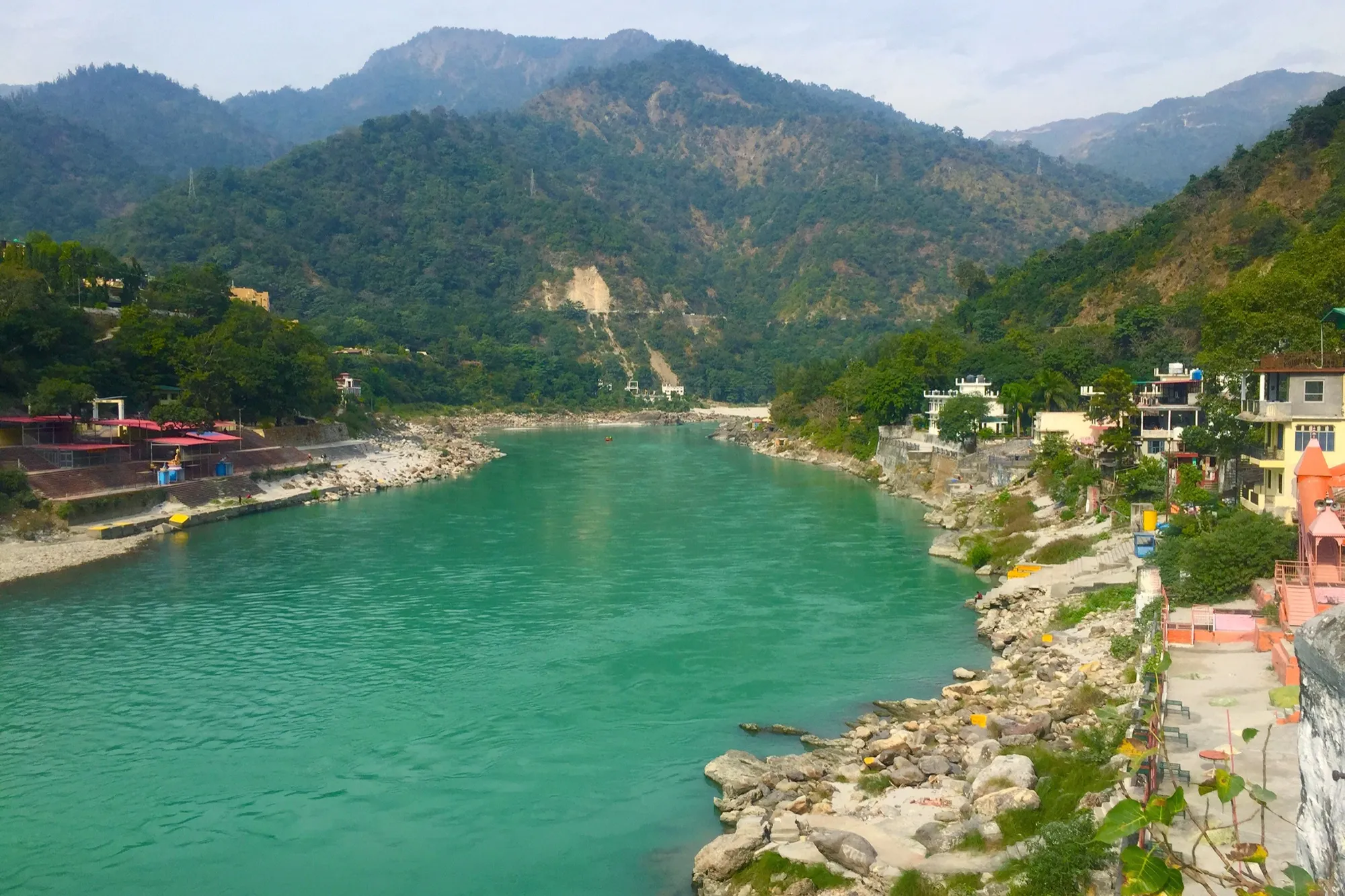 How to reachHow to reach Rishikesh from Delhi by bus, train, car or flightA daytime bus from Delhi takes 5 to 6 hours. Or take the Shatabdi to Haridwar, or fly to Dehradun.
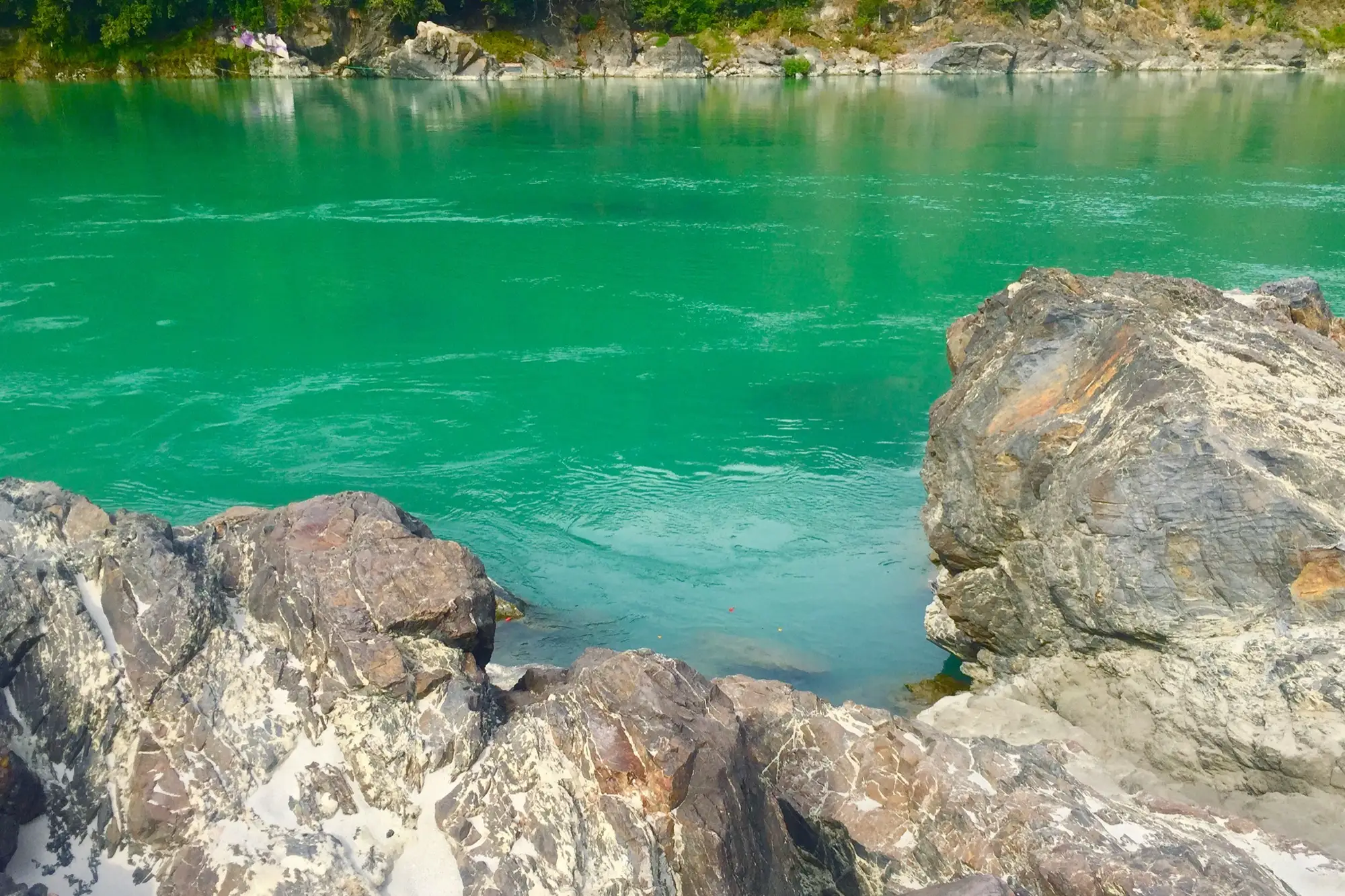 Where to stayWhere to stay in Rishikesh: the best areasTapovan for a working month, Upper Tapovan for quiet. Which bank, which bridges, rents and seasons.
 TreksTreks near Rishikesh: waterfall walks, Neelkanth and bigger startsShort waterfall walks, Kunjapuri at sunrise, the Neelkanth walk, and Chopta or Kedarkantha as bigger starts.
 Food and cafesCafes in Rishikesh: food, prices and where to workCafes in Rishikesh by area, with what to eat, prices for two, opening times and laptop tips.
 Best time to visitBest time to visit Rishikesh for work, rafting, yoga and low pricesMid-October to late November for a working month. Rafting restarts in the last week of September.
 Cost of livingCost of living in Rishikesh: a week and a monthAbout ₹46,300 to ₹70,000 a month for a comfortable life. Frugal starts near ₹19,300.
 ItineraryRishikesh itinerary: 2, 3 and 5 days, and a monthTwo days in order, three and five as extensions, what fails by season, and four weekends.
Planning a week or a month in Rishikesh?
Tell us when you want to come and for how long. We'll reply with homes and rooms that fit.