Long stays
How to rent a home by the month in the mountains without getting scammed
Ways to rent, what to expect on price, what to get in writing, and the scams and paperwork to know before you pay.
Last updated 11 Oct 2026 · 15 min read
For a monthly rental in the hills, pay nothing until you have seen the room on a live video call and have the host's terms in writing. Ask for 15 to 20% off the nightly rate for a month, and treat a price far below the local range as a warning. Never send a full advance to a personal UPI ID you cannot verify, and never scan a QR code to receive money. If you have already paid a scammer, call 1930 at once and file at cybercrime.gov.in.
On this page
- Monthly rental in the hills
- Monthly rent versus nightly rates
- What to confirm in writing before you pay for a monthly stay
- Rental scams in the hills and how to check each one
- How to pay for a monthly rental safely
- Paperwork for a monthly stay in India
- Do homestays in Himachal and Uttarakhand have to be registered?
- What to check in the first 24 hours in a rented home in the hills
- What a curated service changes and what it does not
- What to do if a monthly rental goes wrong
- Frequently asked questions
The safest monthly rental in the hills is one where you have paid nothing until you have seen the room on a live video call, hold the host’s terms in writing, and can pay by a method that leaves a trace. The scams police describe mostly start with a request for money before any of those three things has happened. For a month, ask for 15 to 20% off the nightly rate, and get the total for 30 nights as one number.
This guide is for anyone renting a room or a house in a hill town for a month or longer, whoever they book with. We list homes and rooms around Dharamkot and Almora by the week or the month, and say what that does and does not change near the end.
Monthly rental in the hills: six ways to rent and what each costs you
No route is safe or unsafe on its own. What changes is how much checking lands on you.
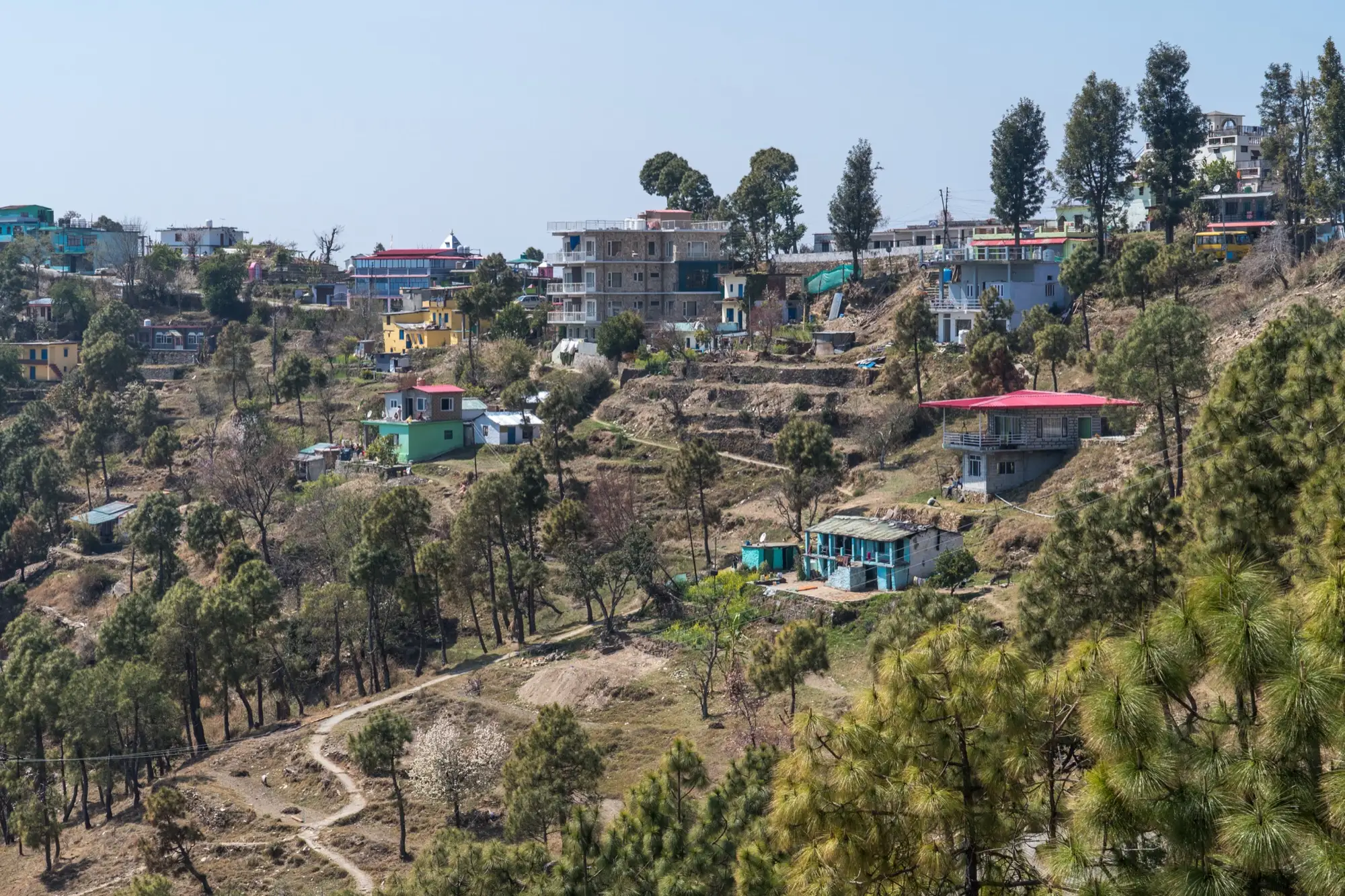
 Kasar Devi, near Almora, in March 2024. Many homes in villages like this sit down footpaths, well away from the road. Photo: Alexkom000, CC BY 4.0, via Wikimedia Commons.
| Route | Price | The trade-off |
|---|---|---|
| A host you find on the ground | Lowest, set by talking | Slow, and terms are often spoken only |
| Online marketplace | A monthly discount shows for 28 nights or more | Stale or fake listings; keep payment on the platform |
| Monthly rate at a homestay or guest house | Ask for 15 to 20% off the nightly rate | Meals, power and cleaning may sit outside the rate |
| Broker | Rent plus a fee you must ask about | An extra layer, and an unknown fee |
| Coliving space | Quoted per room | Fixed terms and shared spaces |
| Curated service | Listed price | Fewer homes to choose from |
A host you find on the ground is the cheapest and slowest route. The usual advice is to book a homestay for three or four nights on arrival and look on foot, asking at cafes, grocery shops and the panchayat, who know which families have a floor empty. You see the room, the road and the wifi before paying. What you give up is a paper trail, since many of these deals are spoken, so use the checklist below.
Online marketplaces and social media groups vary. Airbnb treats 28 nights or more as a monthly stay and collects the first month up front with the rest in monthly instalments, so you never hand over the whole stay at once. Classified sites, Facebook Marketplace and WhatsApp groups hold nobody’s money, and police name them when they describe fake rental listings.
A monthly rate at a homestay or guest house is worth asking for outright. You are offering one check-in and one payment. Ask for the total for 30 nights, including electricity, meals and cleaning, because that is what the monthly rate tends to leave out.
Brokers may know homes that are never advertised. There is no standard fee, so ask the amount first and pay nothing until you have seen the home and agreed terms. Coliving spaces give you a room, a shared workspace and an invoice; ask whether the price includes tax and what the minimum stay is.
Monthly rent versus nightly rates: how big a discount to ask for
Pricing advice written for homestay hosts in 2026 calls 5 to 10% off for a week common and 15 to 20% or more off for a full month reasonable. That is guidance to hosts, not a survey of what they grant, so treat 15 to 20% as your opening ask and 10 to 15% as a fair place to settle.
A room at ₹1,500 a night is ₹45,000 for 30 nights, and 20% off brings it to ₹36,000. Offer what the host gains: one booking, fewer changeovers and less cleaning. Ask whether the discount covers the base rate only, and get a single total in writing.
Reports from 2026 put a basic furnished studio or one-bedroom in the quieter valleys at roughly ₹12,000 to ₹24,000 a month. Most homes listed on our site, each with a tested wifi speed, a desk and power backup, run between ₹21,000 and ₹38,000 a month. A quote far below the local range is not a bargain. Mumbai’s cyber police list rent far below the market, or unusually attractive photos, as a sign of a fake listing.
Three costs often sit outside the monthly figure:
- Electricity is often read from a sub-meter and billed by the unit, and a plug-in heater or geyser running through a hill winter is where the bill grows. Himachal’s homestay rules can put the homestay part of a house on commercial power rates, so ask which rate applies and note the meter reading on day one.
- Cooking gas and heating in winter.
- The deposit. One month’s rent is the usual figure in the hill valleys. The Centre’s Model Tenancy Act caps a residential deposit at two months’ rent where a state has adopted it.
Local price bands are in the Dharamkot and Manali cost of living guides.
What to confirm in writing before you pay for a monthly stay
Send this as a message and ask the host to reply “agreed”. A thread with dates on it gives you a record if anything is disputed later.
- The exact room. Floor, door or unit name, and a photo of it.
- Dates and total price. Move-in and move-out, and the whole price in rupees with what it covers.
- Electricity. Metered or flat, the rate per unit, and the reading at move-in.
- Heating, hot water and gas. Which heaters or geyser, who pays to run them, and who refills the cylinder.
- Wifi and backup. The provider, the speed, any backup connection, who fixes it and how fast, what the power backup runs, and what happens to the rent if the wifi is down for days.
- Road access. Whether a car or taxi reaches the door, or you walk the last stretch.
- Notice period. What happens if either side leaves early.
- Deposit. The amount, when it is paid, what can be deducted, and the date by which it is returned.
- The payee. The name on the account you are asked to pay.
 Many hill homes are reached by roads like this, and the last stretch is often on foot. Ask where a taxi can stop.
Rental scams in the hills and how to check each one
The Ministry of Home Affairs’ cyber crime coordination centre warned in April 2025 about fake websites, social media pages and paid search ads offering guest house and hotel bookings. Victims pay, get no confirmation, and find the number unreachable. In August 2026 the Gujarat CID’s cyber centre described a gang that ran 126 fake booking sites copied from real hotels, dharamshalas and ashrams, using photos lifted from Google Maps and AI-made images. It reportedly took money from nearly 22,000 people through someone posing as a reception manager. Mumbai’s cyber police issued a rental alert in November 2025.
Fake listings and advance-payment fraud
Police list these signs: the host cannot meet because they are abroad, pushes you to pay an advance to “block” the deal, quotes rent far below market, talks only on WhatsApp or Telegram, or sends an ID or agreement as an image.
To check, ask for a live video call, not a recorded clip, and have the host walk you through the room and show the view from the window. Find the property on a map, drop the pin and look at street view for the building and the road. Compare the number the chat gave you with the one on the property’s own map listing. If the host refuses a video call, stop.
Photos of a different property
Scammers lift pictures from map listings and other sites. Run a few of the photos through a reverse image search to see whether they appear under another name, and match the window view to the pin.
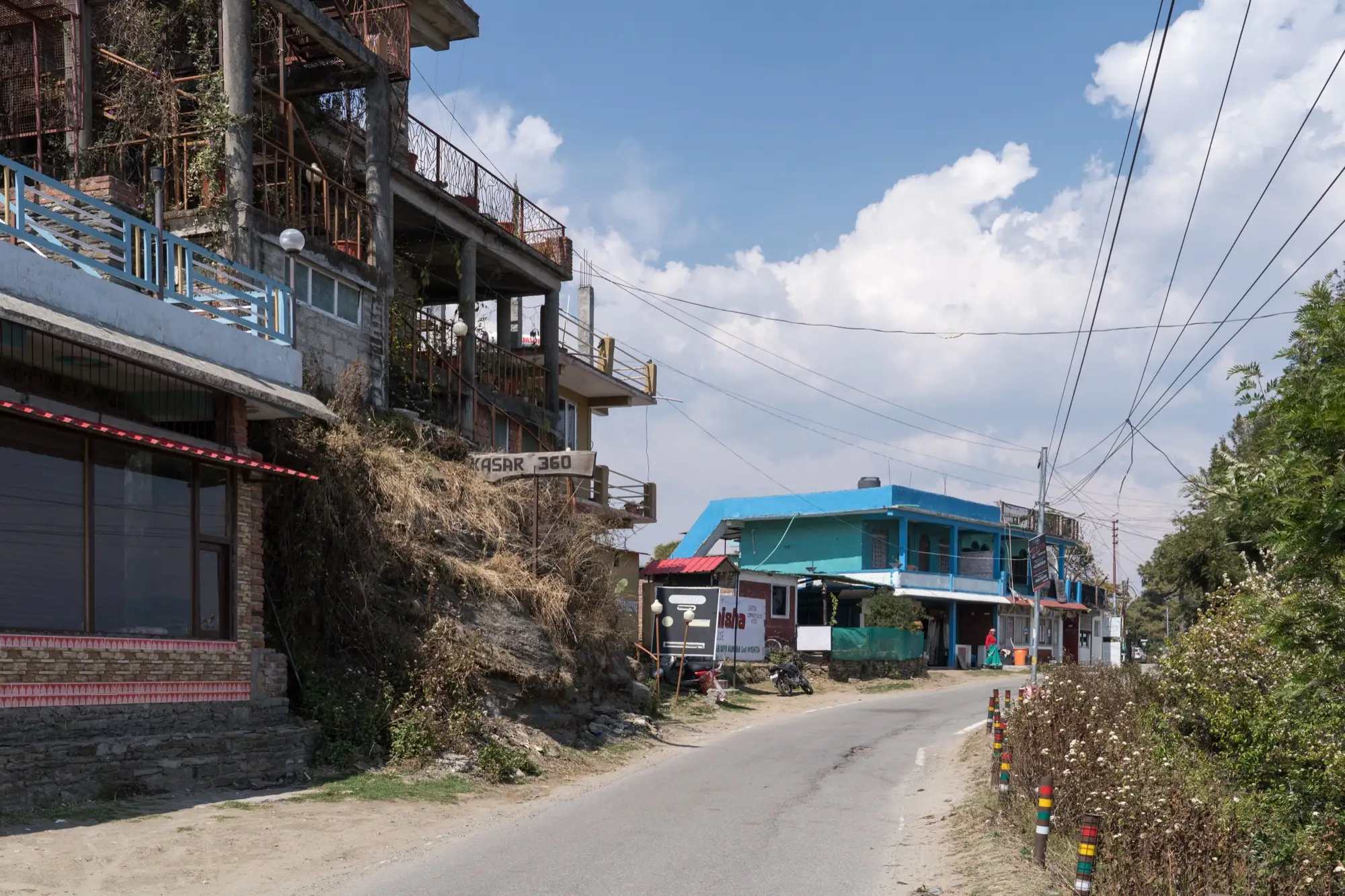 The main road through Kasar Devi in March 2024. Match what a host shows you to a map pin, and ask for a short video of the lane to the door. Photo: Alexkom000, CC BY 4.0, via Wikimedia Commons.
QR code and UPI refund tricks
The Delhi Police cyber cell describes this trick for classified sales, and it fits rentals too. After you pay or agree, the other person says something went wrong and sends a QR code, asking you to scan it and enter your UPI PIN to “receive” money or “get a refund”. You are debited instead. Then comes a “refund” for double the amount, and each scan takes more.
You never scan a QR code or type your UPI PIN to receive money. A real refund appears in your account without any action from you. If a host asks you to scan to receive, or sends a code to “correct” a payment, stop. Police also advise treating unreasonable hurry as a likely sign of a fraudster.
Double booking
A room can be promised twice by honest mistake or by design. Either way, you carry the risk if all you hold is a verbal yes. Get written confirmation that names your dates and the exact room. If you booked through a broker or agent, call the host directly to confirm. Ask what happens if the room is not available, and get the refund timing in writing.
Deposits that are not returned
The evidence for a deposit dispute is made at move-in. Take dated photos of every wall, ceiling corner, bathroom and mattress on the first day, and record the meter reading. Pay the deposit by a traceable method and ask for a receipt that says “security deposit”. Agree the possible deductions and the return date in writing.
How to pay for a monthly rental safely
- Pay in parts. A small amount holds the room, and the balance goes on arrival, after you have seen the room and run a speed test.
- Check the name on the UPI screen before you confirm. If it is a different person from the host you dealt with, ask why.
- Never send the full amount to a personal UPI ID of someone you cannot verify. A booking on a platform keeps your money in its system until you arrive, so do not agree to move the payment off it.
- Avoid cash. Ask for a receipt, and keep screenshots of every payment with the transaction ID for any complaint.
Paperwork for a monthly stay in India: rent agreement, ID and Form C
The 11-month norm. Under section 17 of the Registration Act, 1908, a lease for more than a year, from year to year, or reserving a yearly rent has to be registered. An agreement for 11 months or less avoids that, so the 11-month agreement on stamp paper is the usual form for a longer rental. For one to three months, a written confirmation of the terms above does the same job in practice. A full agreement for a flat or house should name both parties, the address, the rent, the deposit, the electricity billing and the notice period.
Police verification. Some districts require landlords to report tenants to the local police station, and the rules differ by district. Ask the host whether your stay needs it; expect to hand over a photo and an ID copy.
ID at check-in. Expect to show a government photo ID. Himachal’s homestay rules call for a guest register and, for foreign guests, passport documentation. Send ID copies only after you have verified the host.
Form C for foreign nationals. The Immigration and Foreigners Act, 2025 came into force on 1 September 2025, and the old Form C is now Form-III. The person keeping the accommodation, homestays and rented homes included, files it for every foreign national within 24 hours of arrival, and overseas citizens of India are no longer exempt. Carry your passport and visa.
Do homestays in Himachal and Uttarakhand have to be registered?
In Himachal, yes. The Himachal Pradesh Home Stay Rules, 2025 were notified on 25 June 2025. A homestay has to be registered online with the Department of Tourism and Civil Aviation and with the local urban body or panchayat. Running one without registration carries a fine of ₹1 lakh, and repeat violations can lead to the water and power connection being cut.
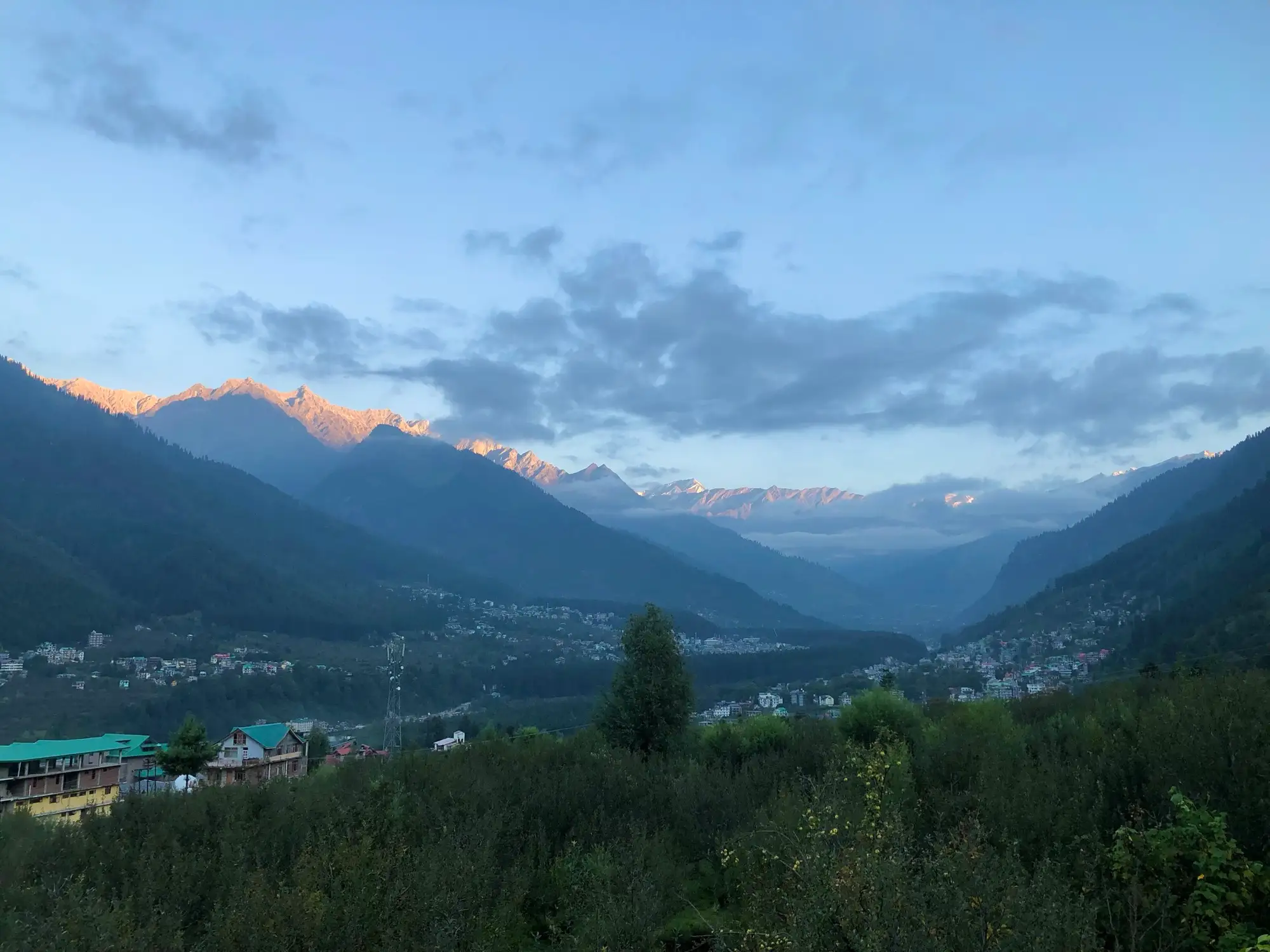 The valley at dawn from Prini, with Manali below. Photo: UnpetitproleX, CC BY-SA 4.0, via Wikimedia Commons.
In Uttarakhand the state revised its homestay scheme in 2026, with cabinet approval reported in May. Permanent residents who own and live in their homes can offer rooms and meals to tourists, up to eight rooms and 24 beds. Registration and renewal are online, and a registration is valid for five years.
Ask a host for the registration certificate. These rules cover tourist accommodation, while a flat let to you on a tenancy agreement is a different arrangement, so ask which one you are getting and have the message say so.
What to check in the first 24 hours in a rented home in the hills
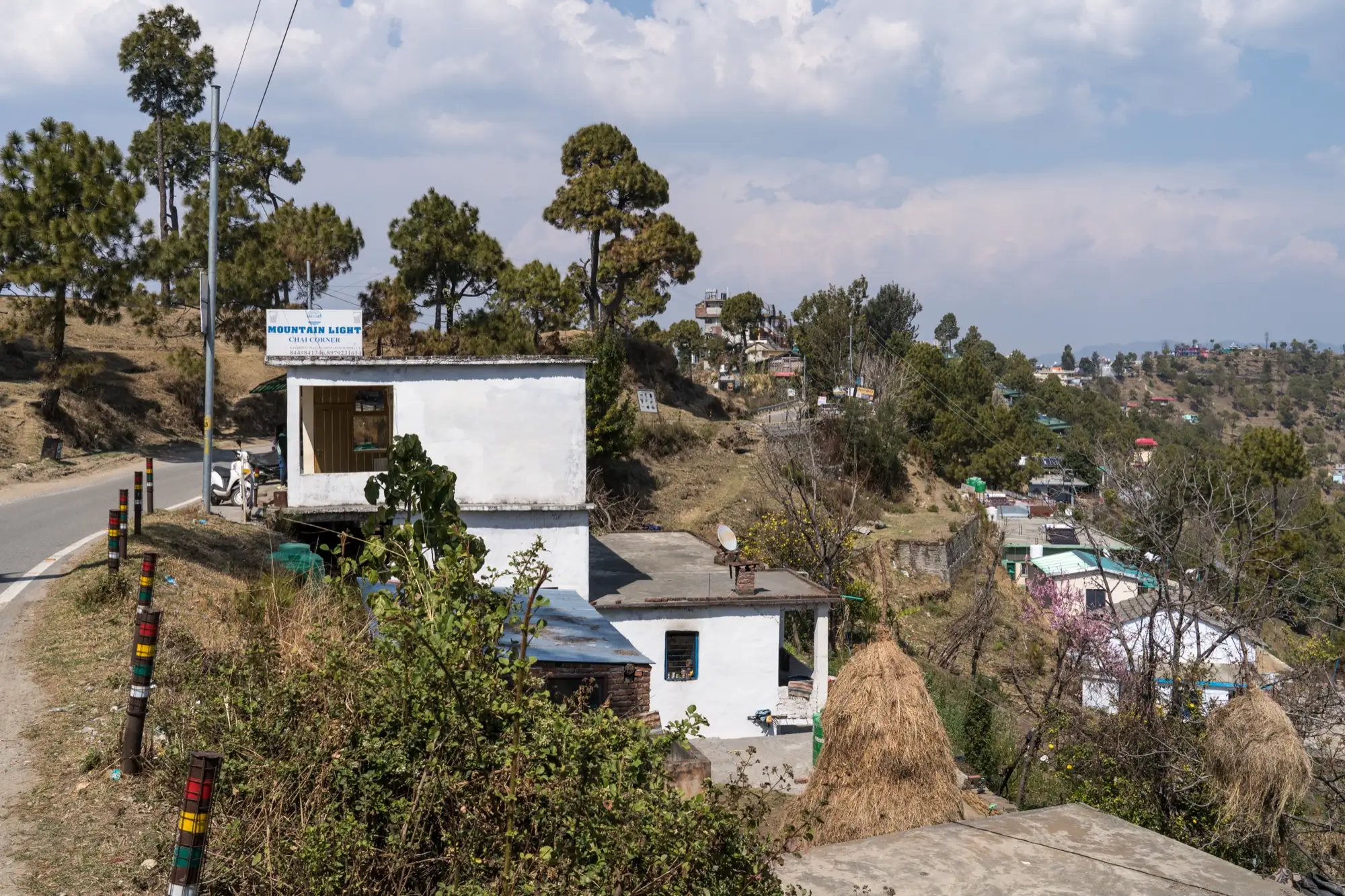 Houses just off the road at Kasar Devi in March 2024. Photo: Alexkom000, CC BY 4.0, via Wikimedia Commons.
- The first hour. Walk through with the host, photograph every room, note the meter reading, test the lock and a second key, and sniff for damp.
- Hot water, heating and backup. Run the geyser and the heater to see how fast water heats and how long it lasts. Ask the host to switch off the mains and watch what the backup runs, and for how long.
- Wifi and mobile data. Run a speed test on the home wifi at the hours you work and screenshot it with the date. Check Jio and Airtel signal in the room too, since a mobile hotspot is a real fallback when the broadband drops.
- Water, gas and surroundings. Find the tank, the cylinder and the spare, then the nearest pharmacy, grocer and cash machine. Notice the road at night and where the sun hits the room.
If something fails, tell the host in writing the same day, with a photo.
What a curated service changes and what it does not
A curated service takes some of the checking off your plate. On Work From Hills, you send a request with your dates and pay nothing at that step. The team confirms with the host, usually the same day, then sends an invoice, and the booking is confirmed when you pay it. Every listing shows the wifi speed with the date it was tested, the power backup and the work desk. The shortest stay is one week, and you get a refund if you cancel at least 14 days before move-in for stays of one or two weeks, or 30 days before for longer stays.
It does not change the mountains. Power cuts, weather and a thin signal on a ridge are still there, so run your own speed test on arrival. To see what is listed, start at all homes and rooms, or the homes around Dharamkot and Almora. The refund rules are set out in full.
What to do if a monthly rental goes wrong: 1930, the portal and 1915
If you have paid a scammer, call 1930, the national cyber crime helpline, as soon as you realise. Have the amount, time, bank and transaction ID ready. Then file a complaint at cybercrime.gov.in under “Financial fraud”, tell your bank, and go to the local police station to file an FIR with your screenshots. Speed matters because banks can be asked to hold the money before it moves on.
If a business has not delivered a paid booking, the National Consumer Helpline takes complaints on 1915 and 1800 11 4000, both toll free, and on WhatsApp at +91 8800001915. It is open from 8 am to 8 pm every day except national holidays, and complaints can also be lodged at consumerhelpline.gov.in.
If a private landlord keeps your deposit, send a written demand that cites the message or agreement, with the move-in photos and the receipt. If that fails, it becomes a matter for a lawyer or the local civil court, and a short consultation is worth it.
Rent by the month if you can make the three checks before you pay. If a host will not do a video call, put a total in writing or take a traceable payment, walk away. For a specific place, read about Kasar Devi and Almora for long stays or renting a room in Dharamshala.
Frequently asked questions
Do I need a registered rent agreement for a one-month stay?
No. The Registration Act makes registration compulsory for leases of more than a year, and an agreement for 11 months or less sits below that line, which is why the 11-month agreement on stamp paper is the usual form. For one to three months in a homestay, a written confirmation that sets out the room, the total price, the deposit and the notice period is what protects you.
How much security deposit is normal for a monthly rental in the hills?
One month's rent is the figure usually quoted for the hill valleys. The Centre's Model Tenancy Act caps a residential deposit at two months' rent, though it applies only in states that have adopted it. Treat two months as the most you should agree to, and write down when and how it is returned.
Is it safe to pay a host's personal UPI ID?
Only after you have verified the host on a live video call, and ideally only for a small part of the total. UPI shows the account holder's name before you confirm, so check it matches the host or business you were dealing with. Keep the full balance for arrival, after you have seen the room.
A host sent me a QR code to refund my money. Should I scan it?
No. Scanning a QR code or entering your UPI PIN only ever sends money out. A genuine refund arrives in your account without you doing anything. Police cyber cells describe a loop in which a 'refund' for double the amount is requested, and each scan debits you again.
What ID will a host ask me for?
Expect to show a government photo ID at check-in. Foreign nationals are asked for a passport and visa, because the person keeping the accommodation files Form-III, the successor to Form C, within 24 hours of arrival. Share copies only after you have verified the host.
What counts as a monthly stay on Airbnb?
A stay of 28 nights or more. Hosts can set a monthly discount that shows in search and in the price breakdown, and the payment is taken as the first month up front with the rest collected in monthly instalments.
Can I get my money back after a rental scam?
Sometimes, and speed decides it. Calling 1930 as soon as you realise lets the helpline ask banks to hold the money before it moves on, so have the amount, time, bank and transaction ID ready. Nothing is guaranteed, which is why the checks before paying matter more.
Homes and rooms you can book now
By the week or the month. See all stays
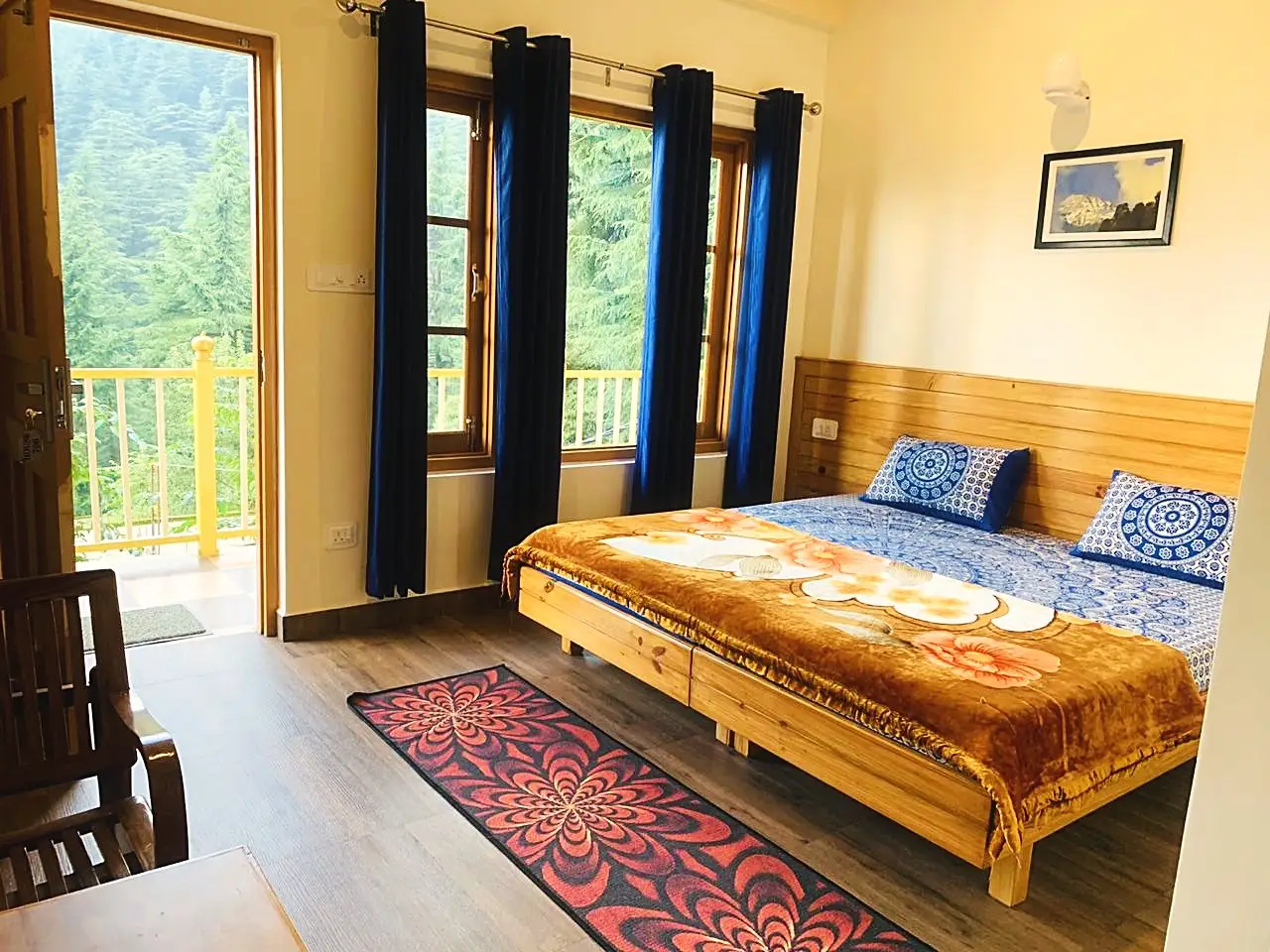

Dharamkot 07
Balcony room above the valley
- 49 Mbps wifi
- Max 2 people
- Power backup
- Balcony
₹25,000/month₹7,000 /week
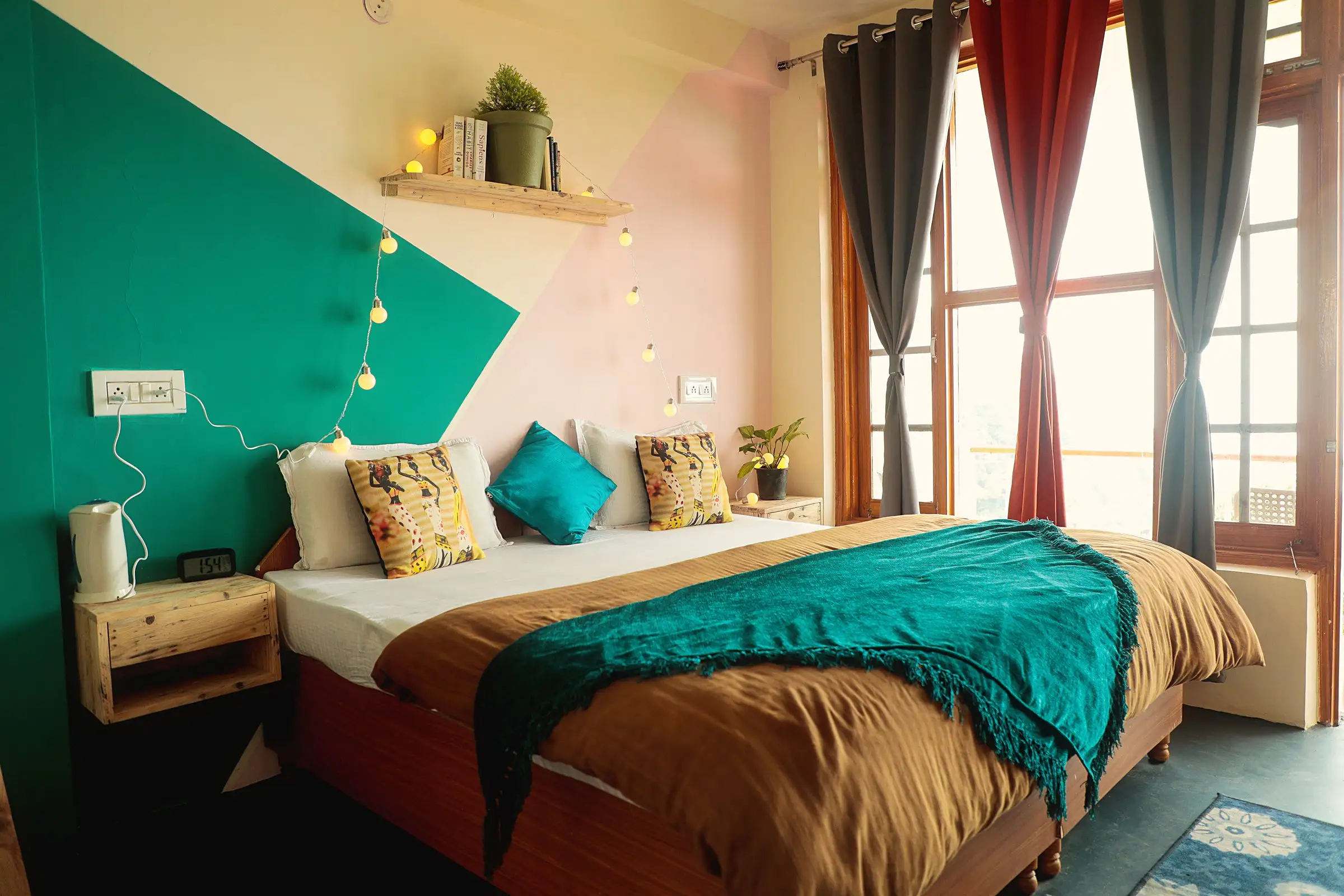

Dharamkot 01
Balcony room with ridge views
- 91 Mbps wifi
- Max 2 people
- Power backup
- Balcony
₹32,000/month₹9,000 /week
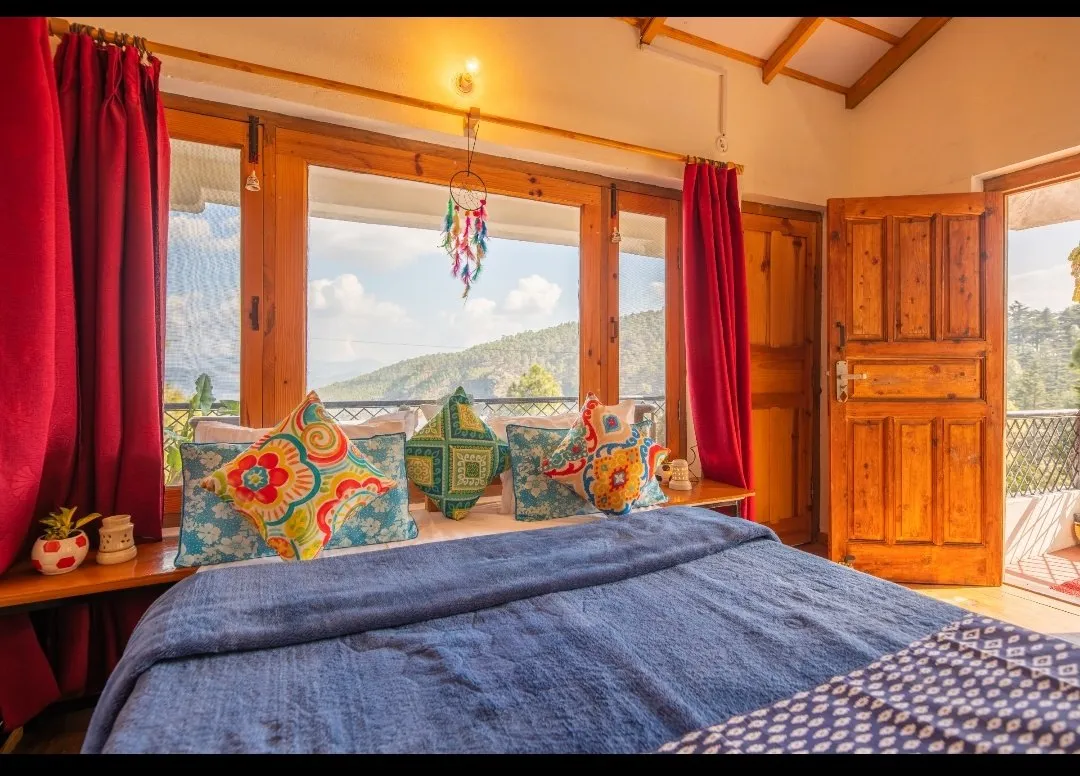

Almora 03
Corner room with a pine balcony, Kasar Devi
- 91 Mbps wifi
- Max 2 people
- Balcony
₹21,000/month₹6,000 /week
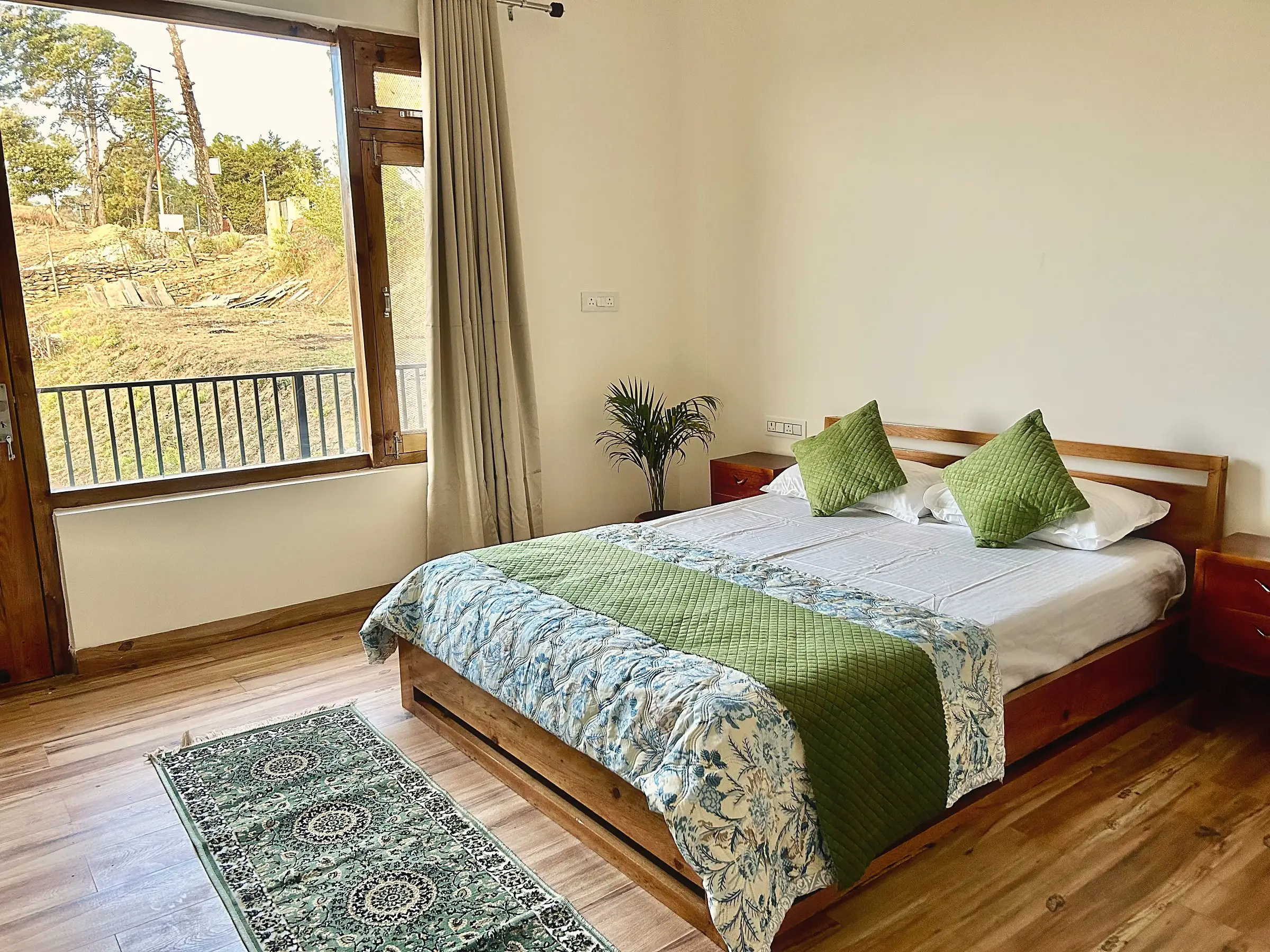

Almora 09
Desk room with a ridge-view balcony, Kasar Devi
- 73 Mbps wifi
- Max 2 people
- Work desk
- Balcony
₹23,000/month₹6,500 /week
Keep reading
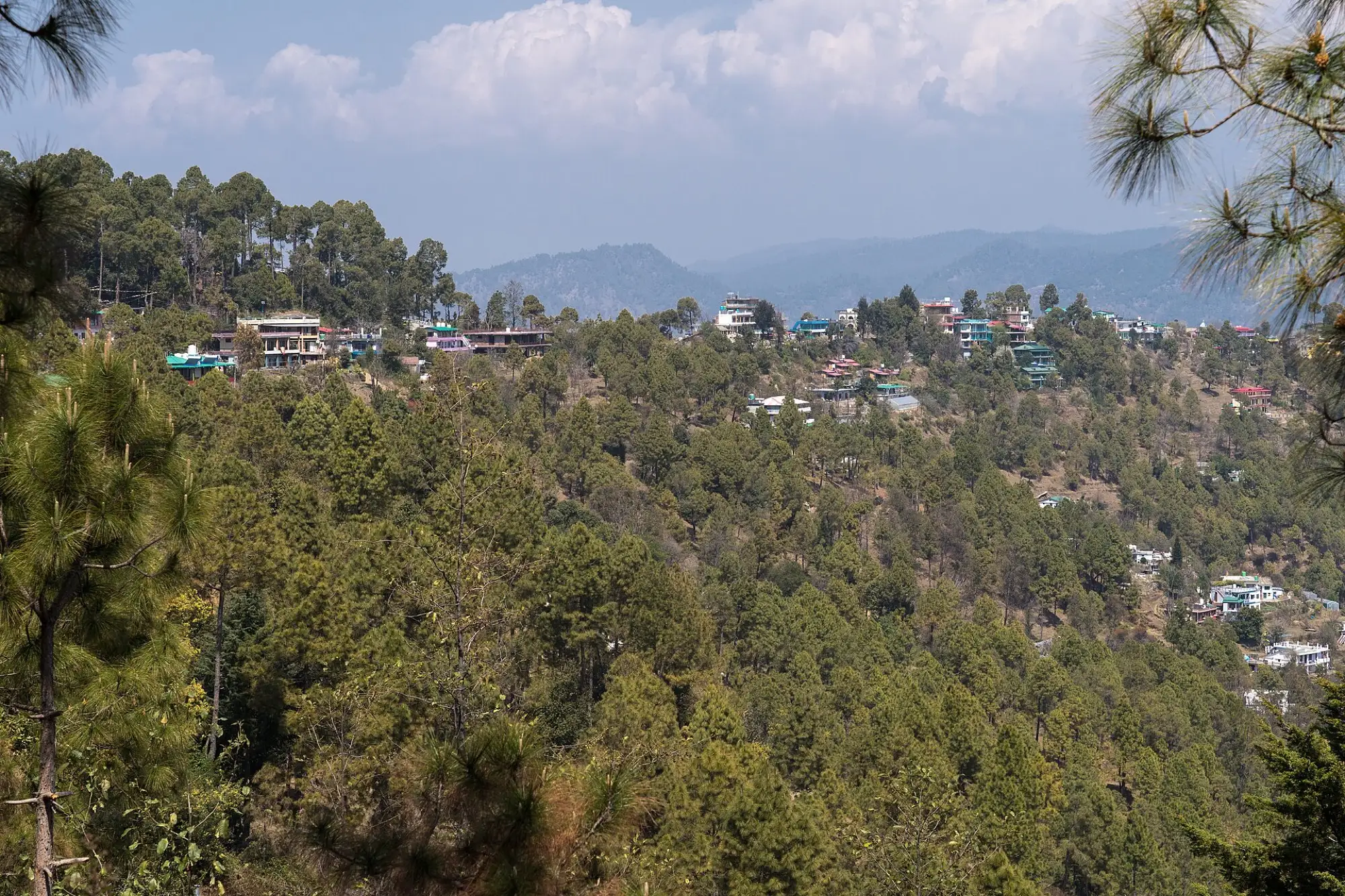 Long stays · 13 min readKasar Devi and Almora for long stays: the ridge, the town and how to live thereWhere Kasar Devi sits above Almora, what to do, how to get there and what a month on the ridge is like.
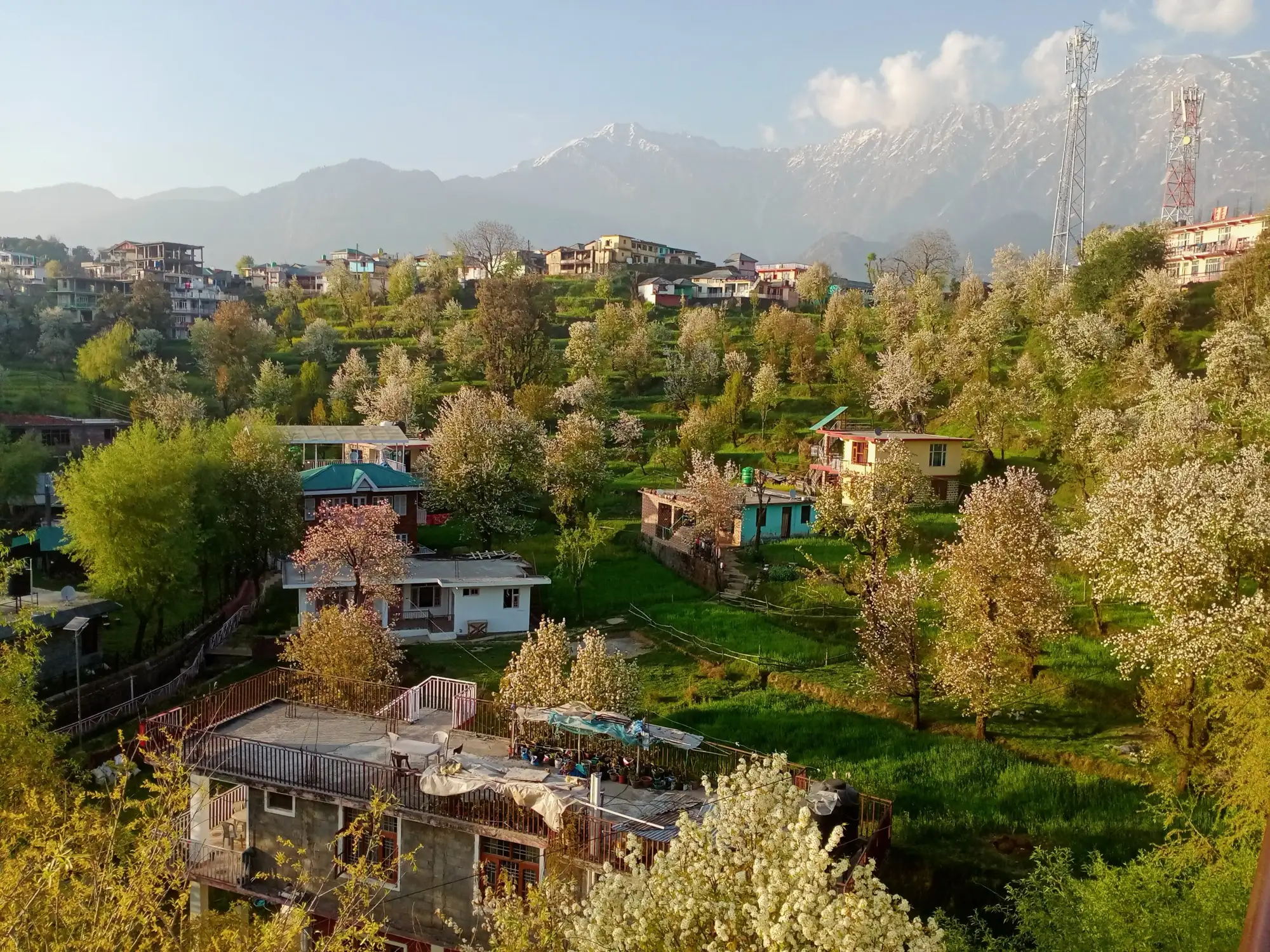 Long stays · 14 min readRoom for rent in Dharamshala and McLeod Ganj: monthly prices and where to lookMonthly rent by room type, the areas compared, the paperwork, the rain and cold, and a viewing checklist.
 Places · 17 min readHill stations near Delhi: 25 picks by drive timeHeight, road distance, drive time and best months for 25 hill towns, from a 4 hour drive to a two day one.
 Places · 15 min readOffbeat places in Himachal Pradesh: quiet villages worth the extra roadSixteen quiet villages and valleys, region by region, with the road, the signal and the season for each.